
Groundworks
Civil Engineering in East Sussex, West Sussex, Kent and Nationwide
Drainage, roads and hardstandings, concrete structures, retaining walls and earthworks, built to the engineer's design by our own teams and our own plant.
Overview
Civil Engineering, Managed In-House
Civil engineering is the part of a development that is not the building: the drainage that takes the water away, the roads and hardstandings that carry the traffic, the concrete bases, chambers and retaining walls that hold everything in place, and the earthworks that shape the site in the first place. The Blackford Group builds those packages for developers, main contractors, local authorities and private clients across East Sussex, West Sussex and Kent, and nationwide where the job justifies the travel.
We are a contractor, not a design practice, and we think that is worth saying plainly. The design comes from your civil or structural engineer. We build to it, we flag anything on site that does not match what the drawing assumed, and we produce the test results, the as-built records and the paperwork that adoption and sign-off depend on. Where you do not have an engineer yet we will tell you at what point you need one, and we are used to working alongside the designer from the first site visit.
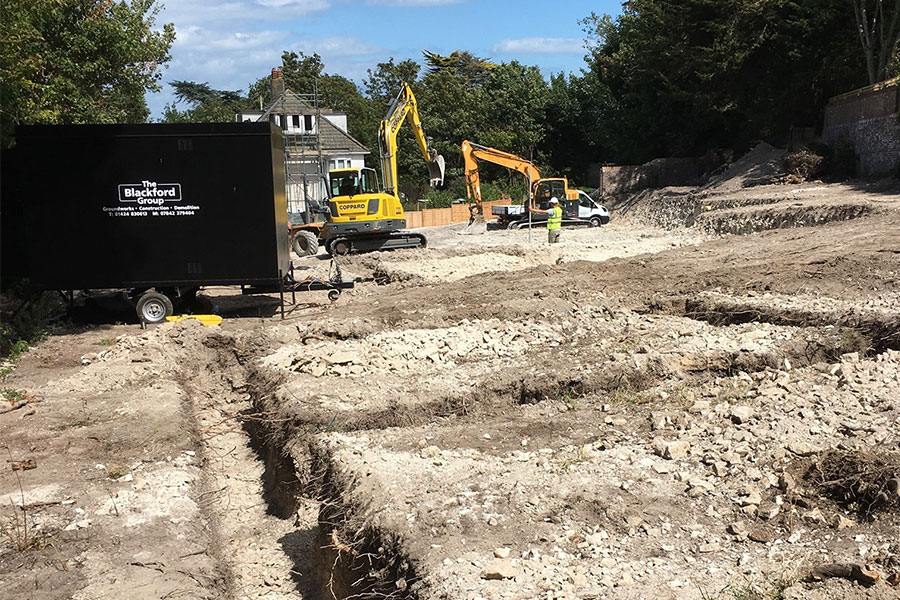
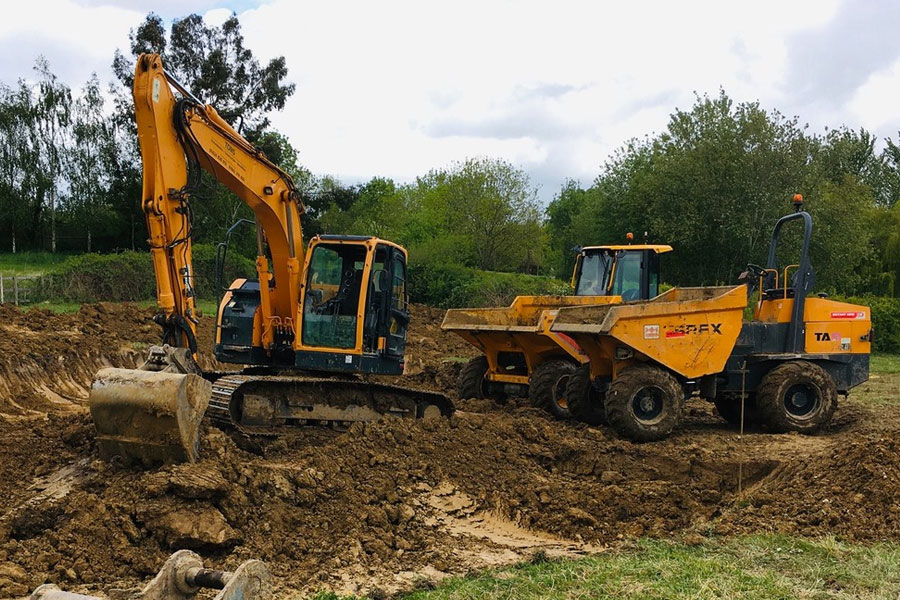
Most of our civils work sits at the front of a programme, on the critical path. The road corridor, the drainage and the foundations have to be in before a frame can arrive or a plot can be started, so the work is planned around dates that other people are relying on. Running our own excavators, dumpers, rollers and tippers means the sequence is ours to control rather than a hire company's.
The standards are the same whether the job is a private yard or an adoptable estate road. Drainage is laid to the falls on the drawing, bedded and surrounded properly, air tested and CCTV surveyed before backfill. Roads are built in the layers and thicknesses the specification calls for, with compaction and levels checked as they go. Concrete is poured in designated mixes with the tickets kept, cured properly and tested where the specification asks. What you get at the end is a set of works that will pass inspection, with the records to prove it.
What we offer
Our Civil Engineering Services
Foul and Surface Water Drainage
Drain runs, manholes, inspection chambers, gullies, outfalls and connections into the existing system or the public sewer, laid to the drawing in PVCu, vitrified clay or concrete pipe on granular bedding. Adoptable drainage is built to the water company's Design and Construction Guidance and inspected at the stages it requires, so the Section 104 agreement runs without surprises.
SuDS and Attenuation
Geocellular attenuation tanks, oversized pipes, soakaways sized to BRE Digest 365, swales, basins, permeable paving and the flow control and silt chambers that make them work. Built to the drainage engineer's levels with the outfall proven before anything is buried.
Roads, Car Parks and Hardstandings
Estate roads, access roads, car parks, yards and haul roads built up in the capping, sub-base, base and surface courses the design specifies, with the compaction and the levels checked layer by layer. Adoptable roads are built to the highway authority's specification under the Section 38 agreement and inspected at every stage.
Section 278 and Highway Works
New accesses, bellmouths, visibility splays, footway crossings and junction alterations on the public highway, built under a Section 278 agreement with the highway authority, with traffic management, permits and inspections handled as part of the package.
Kerbing, Paving and Surfacing
Precast kerbs, channels and edgings laid and haunched in concrete to line and level, footways and paved areas in block, slab or tarmac, and the road markings, signs and street furniture the drawing shows. Falls are set so the surface water goes to the gullies rather than to the doors.
Reinforced Concrete Structures
Bases, plinths, machine foundations, thrust blocks, chambers, culverts, headwalls and retaining walls, formed, reinforced and poured to the structural engineer's details, with the rebar checked before the pour and cube tests taken where the specification calls for them.
Retaining Walls and Level Changes
Mass concrete and reinforced concrete walls, gabion baskets, crib walling, king post walls and reinforced earth systems, built to the designer's details with the drainage behind them that keeps them standing, so a change in level is engineered rather than left as a bank of loose spoil.
Service Ducting and Utility Corridors
Multi-utility trenches and duct runs for electricity, water, gas, telecoms and street lighting, dug to the depths and separations each utility asks for, bedded and surrounded in sand, with marker tape and draw cords in place and the routes recorded on the as-built drawing.
Earthworks and Bulk Excavation
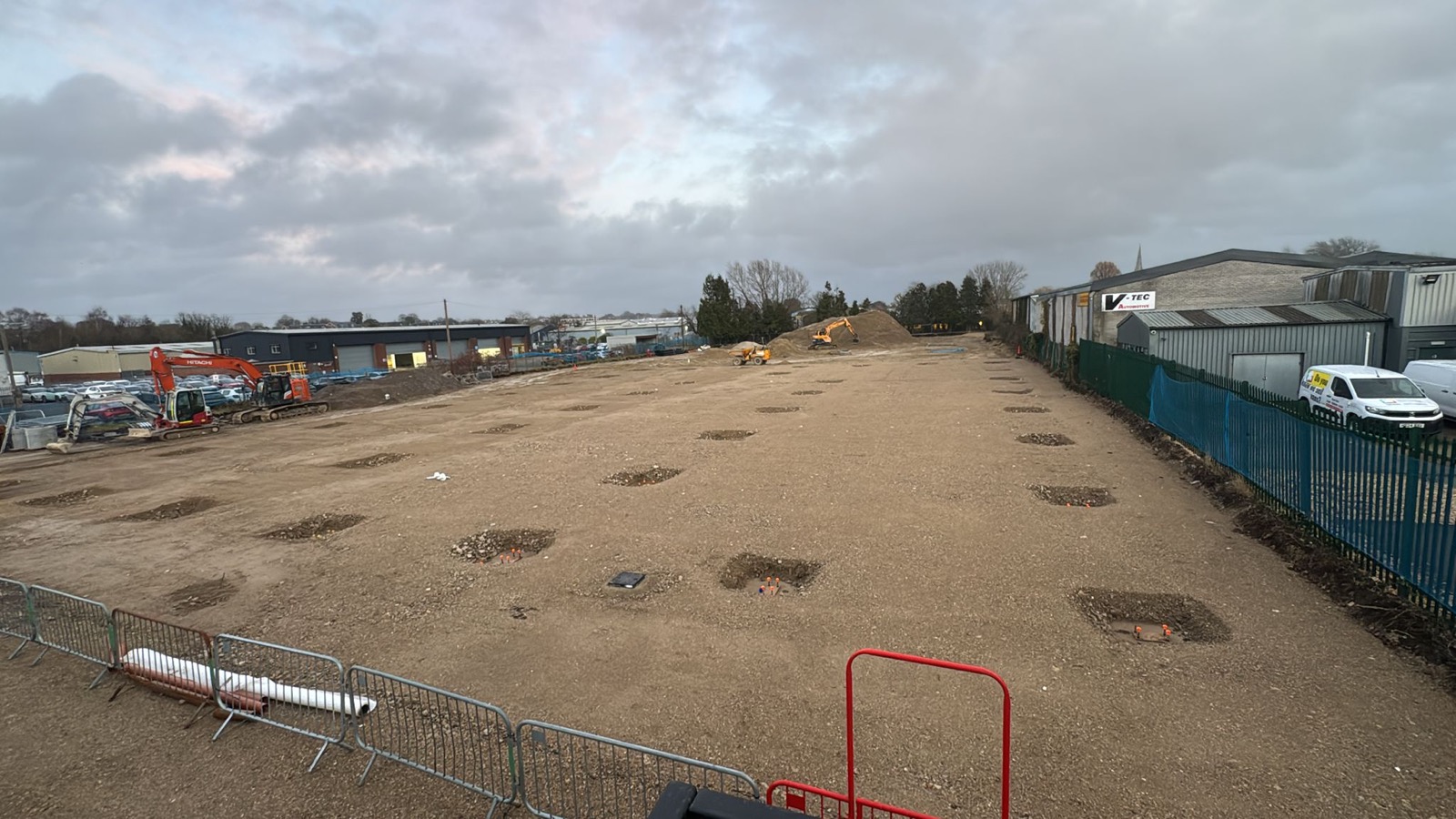
The cut and fill, reduced level digs and engineered fill that shape the site before anything else goes in, run as one package with the drainage and the roads so the platform, the formation and the levels all come from the same datum. See our bulk excavation page for the detail.
How we work
How a Civil Engineering Job Runs.
Drawings, Specification and the Site
We go through the civils drawings and the specification, the ground investigation and the utility records, walk the site, and raise anything that does not add up before it is priced rather than after it is dug. Adoption agreements, permits and inspection stages are identified at the same time so they sit in the programme from the start.
Setting Out and Enabling
The grid and the datum are set out from the survey, services are located and marked, the haul route and the compound are established, and the earthworks bring the site to the levels the drainage and the roads need.
Drainage and Ducting First
Drainage goes in while the site is open, from the downstream connection working uphill, with the chambers built as the runs reach them and every section air tested, and CCTV surveyed where adoption or the specification requires it, before it is backfilled. Ducts go in the same trench runs wherever the utilities allow.
Structures and Road Build Up
Bases, chambers and retaining walls are formed and poured, then the road and hardstanding layers are laid and compacted in sequence, with each layer checked for thickness, compaction and level before the next one goes on. Kerbs, edgings and paving follow, with the surfacing last so it is not damaged by construction traffic.
Testing, Records and Handover
Air test and CCTV results, compaction and plate bearing results, concrete tickets and cube results, and as-built drawings are collected as the job goes on and handed over at the end, with the highway authority's and the water company's inspection records where the works are being adopted.
Our kit
The Plant We Bring to a Civil Engineering Job.
Tracked 360 excavators from mini machines to 30 tonne plant, with tilt rotators, grading buckets and hydraulic breakers
Our own tippers and grab lorries for muck away and for bringing in stone, sand and fill
Dumpers, ride-on rollers, trench rollers and vibrating plates for building up fill, sub-base and backfill in tested layers
GPS rovers, total stations, pipe lasers and rotating lasers, so the drainage falls, the kerb lines and the road levels all work from one datum
Trench boxes, drag boxes and sheets for supported drainage and structure excavations
Drain testing kit and access to CCTV survey for proving drainage before backfill
Concrete kit: formwork, poker vibrators, tamping beams and power floats, with pumps brought in where the pour needs them
Cable avoidance tool and signal generator for locating services before excavation starts
Rules and duties
What the Law Asks of This Work.
CDM 2015, Temporary Works and Services
Civils packages fall under the Construction (Design and Management) Regulations 2015 like every other construction job, with deep drainage and retaining wall excavations treated as temporary works and supported to a designed scheme. Buried services are managed to HSE guidance HSG47: records, a scan, marking, and hand digging or vacuum excavation to prove anything close to the works.
Adoption: Sections 38, 104 and 278
Roads to be adopted by the highway authority are built under a Section 38 agreement of the Highways Act 1980, works on the existing highway under Section 278, and sewers to be adopted by the water company under a Section 104 agreement of the Water Industry Act 1991. Each brings its own specification, inspection stages and maintenance period, and we build and record the works so those inspections pass first time.
Drainage Standards and Building Control
Private drainage is built to Approved Document H and BS EN 752, and adoptable sewers to the water company's Design and Construction Guidance. Building control or the warranty inspector sees drainage on test before backfill and foundations before concrete, and the records of those inspections form part of the handover.
Waste and the Environment
Excavated material and construction waste travel under the duty of care in Section 34 of the Environmental Protection Act 1990, with on-site re-use handled under the CL:AIRE Definition of Waste Code of Practice. Silt, concrete washout and fuel are kept out of watercourses and drains, which on a drainage job means managing them from the first day rather than the last.
Who we work for
Civil Engineering for Every Kind of Client.
Developers and Housebuilders
Estate roads, adoptable sewers, attenuation, plot drainage and the Section 278 access, sequenced so plots are released in the order the sales programme needs and the adoption inspections are passed as the works go in rather than chased at the end.
Commercial and Industrial
Yards, service roads, HGV hardstandings, drainage with interceptors, machine bases and retaining walls for warehouses, depots, factories and plant. Ground that takes HGVs and racking loads is built up and compacted to carry them, with the test results to show it.
Public Sector and Infrastructure
Works for local authorities, schools, hospitals, utilities and estates, where the specification is fixed, the inspection regime is thorough and the site often stays open to the public. We plan the phasing and the traffic management around that rather than around what is convenient for the machines.
On site
Civil Engineering in Action
FAQs
Civil Engineering Questions
Do you design the civils as well as build them?+
No. The design comes from your civil or structural engineer and we build to it. We are happy to be involved from the first site visit, to price options and to point out where a detail will be awkward to build, and we will tell you when a job needs an engineer that does not have one yet. Keeping design and construction separate is also what the adoption bodies and the warranty providers expect to see.
Can you build adoptable roads and sewers?+
Yes. Roads are built under a Section 38 agreement to the highway authority's specification, sewers under a Section 104 agreement to the water company's Design and Construction Guidance, and both are inspected at set stages as the works go in. We build to those standards from the first layer and keep the records the inspectors ask for, because putting right an adoptable road after the surfacing is on is expensive.
What is a Section 278 agreement?+
It is the agreement with the highway authority that lets a developer alter the existing public highway, typically for a new access, a bellmouth, visibility splays or a junction change. The authority approves the design, the works are built to its specification under its inspection, and there is a bond and a maintenance period. We carry out the works themselves, including the traffic management and the permits.
How is the drainage proved before it is buried?+
Every run is air tested, and where the specification or the adoption body asks for it, CCTV surveyed, before the trench is backfilled. Manholes and chambers are checked for line, level and benching. The results go into the handover, so nothing is buried that has not been shown to work.
Can you work on a site that is still occupied or open to the public?+
Yes, and much of our public sector work is exactly that. It changes the phasing rather than the outcome: separated pedestrian routes, agreed working hours, traffic management for the highway works, and dust and noise controlled at source. It usually takes longer than an empty site, and the programme should say so honestly from the start.
Do you take on small civils jobs?+
Yes. A new access and a drainage connection for a single building is built by the same teams that build an estate road, with the plant sized to the access. Tell us what the drawing shows and where the site is and we will tell you straight away whether it is a job for us.
Related Groundworks Pages
Groundworks
Excavation, foundations, drainage, service ducting and concrete works, set out to the engineer's drawings and delivered nationwide by our own teams and plant.
→Bulk Excavation
Reduced level digs, cut and fill, basement digs and site wide earthworks, moved with our own excavators and our own tippers, so the ground is at formation when the next trade needs it.
→Other Divisions
If you have a civils package coming up, the useful first conversation is about the drawings and the dates: what the engineer has designed, which parts are being adopted, where the connections are, and when the frame or the first plot needs the ground beneath it finished. Send us what you have, or ring the office, and we will tell you honestly how we would build it and what it will cost.
Need Civil Engineering?
Tell us what you need moving, clearing or building and we will come back with a straight answer and a fair price.