
Division 06
Sea Defence and Coastal Protection Works
Rock armour, revetments, sea walls and groynes built to take wave energy year after year, delivered nationwide with our own plant and crews.
Overview
Sea Defence, Managed In-House
Sea defence is the work of putting something between the sea and the land behind it, then making sure that something survives the next storm. Our sea defence division builds and repairs rock armour revetments, concrete sea walls, timber and rock groynes, sheet piled toes, gabion and rock roll protection, and carries out beach recharge and reprofiling. We work on open coast frontages, tidal estuaries, harbour and quay walls, and inland flood banks where the same materials and methods apply.
Most enquiries reach us in one of three situations. The defence has failed or is close to it: the toe of a sea wall has been scoured out, the concrete is spalling and the reinforcement is showing, or timber groynes have rotted and the beach behind them has drawn down. The frontage has never been protected and erosion is now taking ground, a track, a car park or a garden. Or a scheme is already designed and consented by a coastal engineer and needs a contractor who can get plant, rock and concrete onto a beach and work to the drawing.
The difference between a coastal job and an ordinary civils job is that the site disappears twice a day. Everything is planned around tide tables, wave forecasts and surge warnings rather than a standard working shift. Rock has to be stockpiled above the reach of a spring tide, concrete has to be poured and protected inside a window, and every person and machine on the beach has to be off it and accounted for before the water comes back. That planning is most of the job, and it is where a scheme is won or lost.
We run our own plant and fleet and manage every stage in-house, which matters more here than on most work. Our demolition crews break out the failed structure, our haulage side brings armourstone in and takes arisings away, our piling teams handle sheet piled toes and cut off walls, and the groundworks teams do the excavation, drainage and concrete. One contractor, one programme, one set of records. When a tidal window opens there is nobody else to wait on.
What we offer
Our Sea Defence Services
Rock Armour and Armourstone Revetments
Graded armourstone placed to a designed profile so wave energy breaks and dissipates in the voids instead of hitting a solid face. A rock revetment is built in layers: a geotextile or granular filter over the prepared slope, a secondary underlayer, then primary armour placed piece by piece with a grab so each stone keys into its neighbours. Rock is specified to BS EN 13383, with the grading and the mass range set by the designer, and it is placed to profile and checked by survey, never tipped and pushed.
Sea Walls and Concrete Coastal Structures
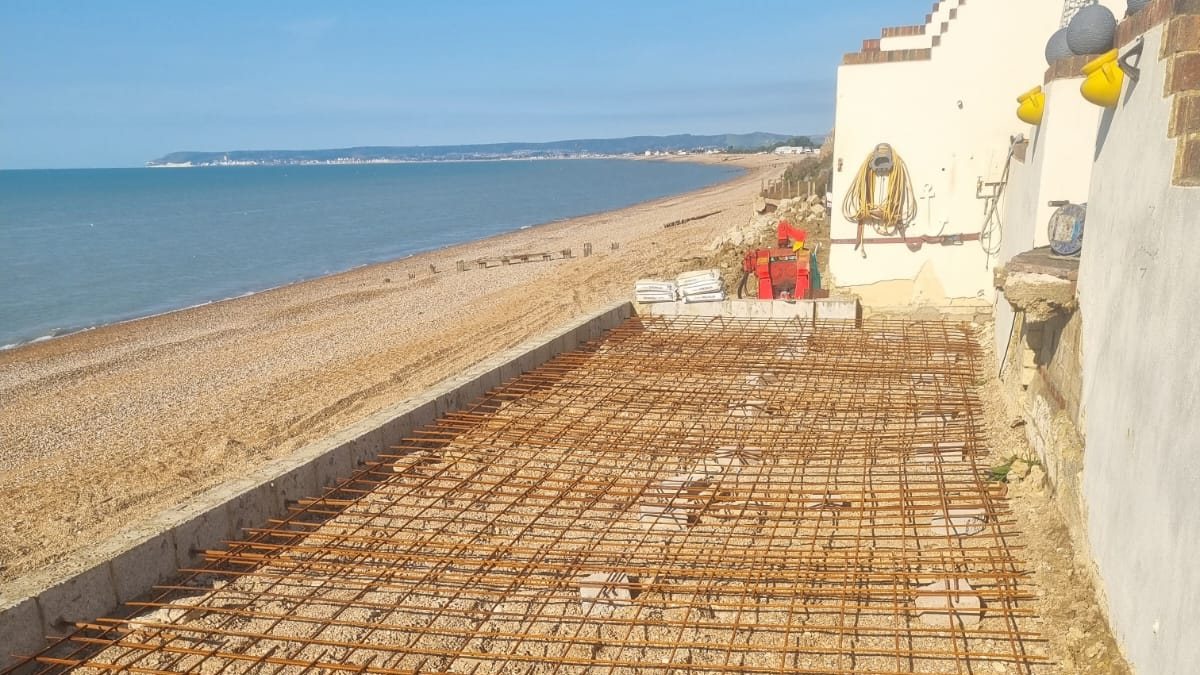
Mass and reinforced concrete walls, wave return curves, aprons, stepped revetments, splash walls and promenade edges. Marine concrete is a different specification to inland work: BS 8500 exposure classes for the tidal, splash and spray zones, more cover to the reinforcement, and cements using ground granulated blastfurnace slag to slow chloride attack. We form, pour and cure between tides, with joints, waterstops and drainage detailed so water that gets behind the wall can get back out.
Groynes, Timber and Rock
Groynes hold shingle and sand on the frontage so the beach itself does the work of absorbing waves. We install and replace timber groynes in dense hardwoods such as ekki or greenheart, or whatever the specification allows, with driven or piled posts and bolted planking, and we build rock groynes where a heavier structure suits the wave climate. Old groynes are usually well past their life, so removal, beach level checks and reprofiling of the bays either side normally come with the job.
Sheet Piling, Toe Protection and Scour Repair
Most sea wall failures start at the toe. Once the beach draws down, the sea undercuts the foundation and the wall follows. We install steel sheet pile toes and cut off walls using vibratory or pressed methods, place rock toe berms and mattresses, and rebuild scoured foundations. Sheet piles for marine work are specified with a corrosion allowance for the exposure zone, and coatings or cathodic protection are used where the design calls for them.
Gabions, Rock Rolls and Bank Protection
For estuaries, tidal creeks, river frontages and lower energy sites, gabion baskets, mattresses and rock rolls give bank protection at a lower cost than rock armour. Wire is specified with heavy corrosion protection such as a Galfan or zinc aluminium coating, often with a PVC sheath as well, because standard galvanised mesh has a short life in salt water. Baskets are filled by hand or grab, tied properly, and laid over a filter so fines cannot wash out from behind them.
Beach Recharge and Shingle Recycling
A beach is a defence in its own right. We import and place shingle or sand to raise beach levels, recycle material from the downdrift end of a frontage back to the updrift end, and reprofile crests and slopes to the designed section after a storm. This is high volume work with dump trucks, dozers and low ground pressure plant, set out and checked by survey and controlled so machines stay off soft ground and out of the water.
Removal and Demolition of Failed Defences
Cracked and undermined concrete walls, rotten timber, collapsed gabions and redundant outfalls have to come out before anything new goes in. Our demolition division breaks out reinforced concrete with hydraulic breakers and pulverisers, cuts and separates the reinforcement, and works to the sequencing principles in BS 6187 so a structure that is holding back ground is taken down in a controlled order rather than pulled over.
Outfalls, Slipways, Steps and Access Works
The structures around a defence matter as much as the wall. We build and repair surface water and land drainage outfalls with headwalls and flap valves, slipways, beach access steps and ramps, handrails and safety ladders, and the promenade or car park reinstatement that follows. Access works are often the part that decides whether the public can use a frontage again once the engineering is finished.
How we work
How a Sea Defence Job Runs.
Survey, Consents and the Tidal Plan
Before any plant moves we need the numbers the beach is going to give us. That means a topographic and beach profile survey, levels taken at the toe of the existing structure, a condition survey of what is there, and a check of the design against tide tables, predicted surge and the wave climate on that frontage. Alongside that the consents are confirmed: work below mean high water springs generally needs a marine licence, work on or near a main river or a flood defence needs a permit, and designated sites bring ecology surveys and seasonal restrictions. We then work out the usable hours per tide, and that figure drives the whole programme.
Access, Haul Route and Compound
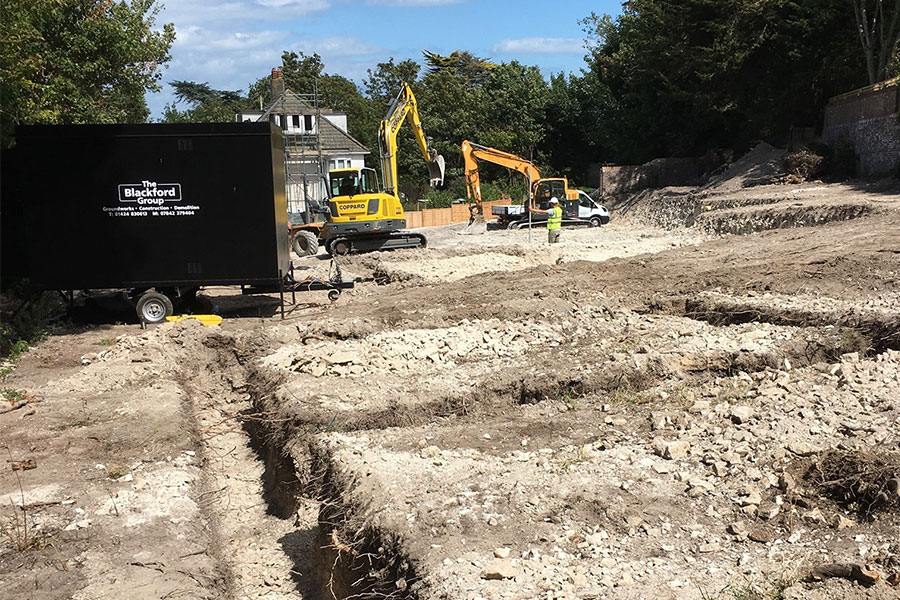
Getting heavy tracked plant and imported armourstone down onto a beach is a project in itself. We assess the approach roads, bridges and ramps for weight and headroom, form temporary access using stone, trackway mats or a purpose built ramp, and set the compound and stockpiles above the reach of a spring high water where they will not be lost. On the beach we mark exclusion zones, set refuge points and escape routes, agree radio and horn signals, and put a named tide watch in place. Public frontages also need pedestrian routes, fencing and signage that stay put in wind and salt.
Breaking Out the Old Defence
The failed structure comes out in a controlled sequence, worked with the tide rather than against it, so nothing is left part demolished when the water returns. Concrete is broken out and the reinforcement separated, timber groynes are drawn or cut off at the level the design calls for, and old gabion wire is cut clear and removed. Sound concrete is crushed on site where the scheme and the consents allow and reused as fill or as a lower layer, so less material has to be tipped and less has to be brought in. Anything suspected of containing asbestos or tar bound material is identified first and dealt with separately.
Toe, Filter and Armour to Profile
The rebuild works from the bottom up. The toe is excavated to the designed level, sheet piles or a toe berm go in where they are specified, and the slope is trimmed and covered with a geotextile or granular filter so fines behind the structure cannot wash out. The secondary underlayer goes on next, then primary armour is placed stone by stone with a grab, each one turned and set so it keys into the ones around it and the layer thickness comes out right. The profile is checked with GPS and a survey rover as the work proceeds, because armour that is out of line is armour that moves in the first storm.
Concrete Works and Reinstatement
Concrete elements are formed, poured and cured inside the window the tide allows, with pours planned so no fresh face meets the sea before it has strength, and with protection ready if the forecast turns. Once the structure is up, drainage is connected, joints and copings are finished, and the promenade, path, car park or landscaping behind the wall is reinstated. The beach is reprofiled and recharged where that is part of the scheme, temporary access is taken out and the ground made good, and we hand over the records the job has generated: as built survey, concrete and materials records, and the waste paperwork.
Our kit
The Plant We Bring to a Sea Defence Job.
Long reach tracked excavators to work down a revetment slope and out to the toe without standing on fresh armour
Orange peel, rock and selector grabs for lifting and turning individual armourstone so each piece is placed and keyed rather than tipped
Hydraulic breakers, pulverisers and shears for breaking out old concrete sea walls, aprons and headwalls and separating the reinforcement for recycling
Sheet piling equipment, vibratory hammers and pressed piling rigs for toe piles, cut off walls and temporary works, using the quieter pressed methods where noise or vibration is a concern
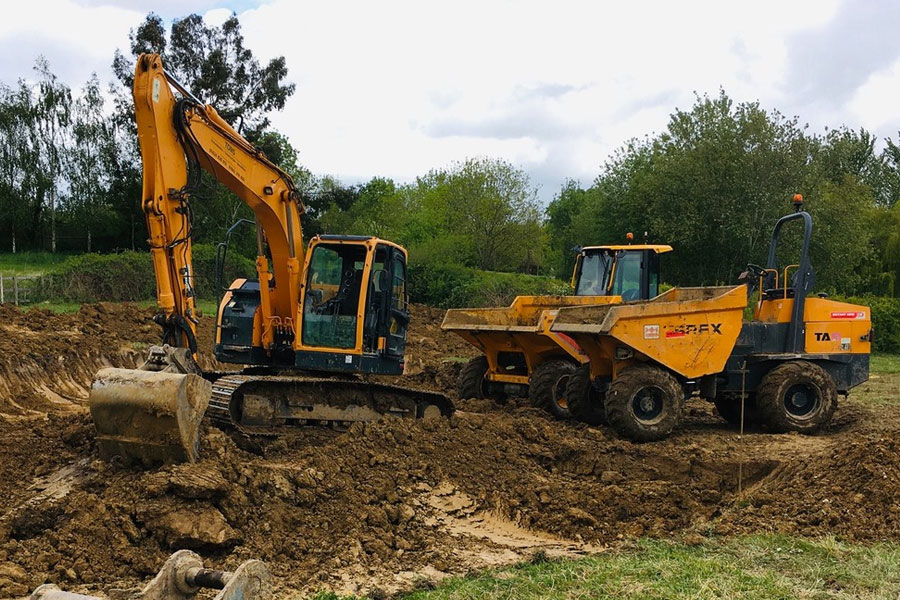
Articulated dump trucks, tracked dumpers and low ground pressure dozers for moving rock, shingle and fill across soft beach ground without bogging in
Tippers and low loaders from our own haulage fleet to bring armourstone, aggregate and plant in and take arisings away
Mobile crushing and screening plant to turn sound concrete arisings into fill or lower layer material instead of carting them off the frontage
GPS machine control and survey rovers to build and check the profile as the work goes on, plus pumps for dewatering and silt control in excavations below the water table
Rules and duties
What the Law Asks of This Work.
Marine Licensing, Permits and Coastal Consents
Coastal work sits under more than one regulator, and the consents have to be in place before a machine reaches the beach. Construction or the deposit of materials below mean high water springs generally needs a marine licence under the Marine and Coastal Access Act 2009, issued by the Marine Management Organisation in England, with Natural Resources Wales and the equivalent bodies in Scotland and Northern Ireland licensing the same work elsewhere. Work on or near a main river, a flood defence or a tidal flood risk area needs a flood risk activity permit from the Environment Agency, or its equivalent outside England, under the Environmental Permitting Regulations 2016. Coast protection authorities, usually the district or borough council, have their own powers under the Coast Protection Act 1949, and planning permission is often needed as well. Where the frontage is a Site of Special Scientific Interest or sits in a protected habitat, Natural England consent and ecology surveys come into it, along with seasonal limits for nesting and overwintering birds and for seals, and duties under the Wildlife and Countryside Act 1981 and the Conservation of Habitats and Species Regulations 2017. We work to these requirements and will help your engineer or consultant put the applications together, but the applications themselves belong to the client or the appointed designer, and we do not start on a frontage until they are granted.
CDM 2015, Working Near Water and Maritime Standards
The Construction (Design and Management) Regulations 2015 apply to coastal schemes exactly as they do to any other construction project, with duties on the client, the principal designer and the principal contractor, a construction phase plan, and the health and safety file at the end. On a beach that plan has to deal with hazards you do not meet on an ordinary site: drowning, being cut off by a rising tide, soft and shifting ground, slips on weed covered concrete, cold water, and the public walking through the works. In practice that means a named person on tide watch, agreed cut off times, refuge points and escape routes, throwlines and buoyancy aids kept to hand, and a stop work trigger tied to the wind, wave and surge forecast. Lifting armourstone and precast units brings in the Lifting Operations and Lifting Equipment Regulations 1998, plant and attachments sit under the Provision and Use of Work Equipment Regulations 1998, and taking down an existing structure follows the sequencing principles in BS 6187. Design and materials for maritime work sit under BS 6349, and armourstone under BS EN 13383. Where the works affect navigation, the harbour or navigation authority needs notice so the site can be marked and mariners warned. Our method statements and site records are written around all of that.
Waste Duty of Care and Material Off the Beach
Broken concrete, rotten timber, scrap steel, contaminated arisings and excavated sediment all become waste once they leave the works, and the duty of care in section 34 of the Environmental Protection Act 1990 applies to every load. The material has to be described correctly, moved by a carrier registered for that purpose, taken to a site permitted to accept it, and covered by transfer notes that are kept on file. Hazardous material, which on older coastal structures can mean asbestos cement, tar bound surfacing, coal tar coatings or contaminated fill, is handled under the Hazardous Waste (England and Wales) Regulations 2005 with consignment notes, and any asbestos work is governed by the Control of Asbestos Regulations 2012, which sets out what has to be surveyed, who may carry out the work and which work is licensable. Where crushed concrete or excavated material is reused on the same site, that reuse is planned and recorded under the CL:AIRE Definition of Waste Code of Practice. Silt, washings and concrete water are controlled so nothing runs into the sea or a watercourse, because causing that pollution is an offence in its own right. We work to these duties and keep the notes and records with the site paperwork so the client has them at handover.
Who we work for
Sea Defence for Every Kind of Client.
Councils and Public Frontages
Coast protection authorities, county councils, harbour boards and civil engineering consultants running promenade, groyne and sea wall schemes on public frontages. This work is usually designed and consented before it goes out to tender, so what is wanted from the contractor is delivery: mobilising onto a live seafront, keeping pedestrian routes open and safe through the works, phasing so a beach or car park is not shut for longer than agreed, and holding the programme when the tide and the weather keep moving the goalposts. We build to the engineer's drawings and specification and keep the records the scheme calls for.
Ports, Industry and Infrastructure
Quay and dock walls, jetty approaches, outfalls serving industrial sites and water treatment works, scour protection around structures, and defences protecting coastal roads, railways, substations, caravan parks and holiday sites. The common thread is that the asset behind the defence has to keep working while the job goes on, so access, deliveries and shutdowns are planned around the operator rather than the other way round. Piling, groundworks and haulage are all our own divisions, so one scheme does not need a separate firm for each element of it.
Private Frontages and Landowners
Landowners, farms, estates, private beaches and homeowners with a stretch of coast, cliff or tidal bank that is losing ground. Private schemes are usually smaller, but the rules do not shrink with them: a marine licence or a permit may still be needed, and a defence that simply moves the problem along to the neighbouring frontage will not get consent and does nobody any favours. We will look at the site, say plainly what is realistic, and point you to a coastal engineer where the scheme needs a design before there is anything sensible to price.
On site
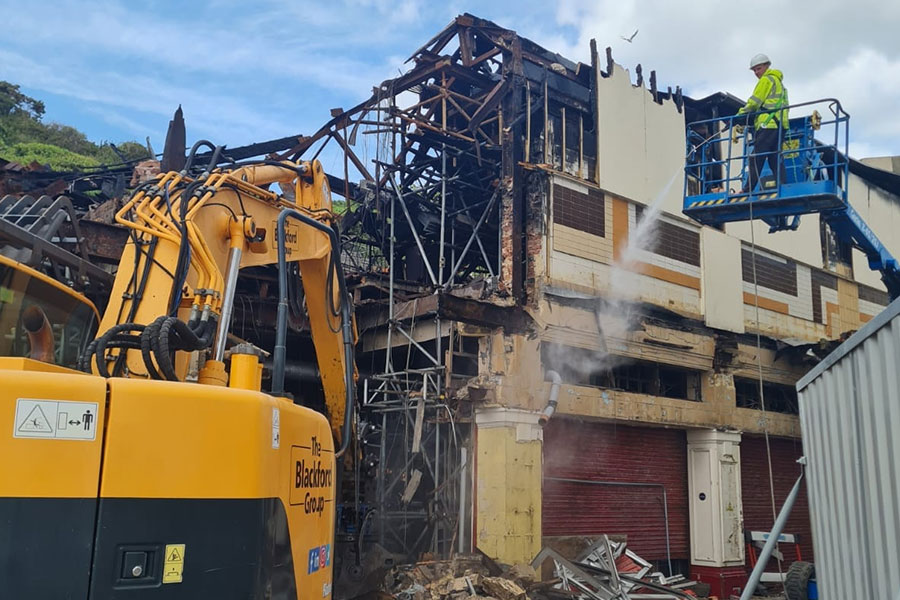
Sea Defence in Action
FAQs
Sea Defence Questions
Do I need a marine licence or other permission before coastal work can start?+
Usually yes. Construction or the deposit of material below mean high water springs generally needs a marine licence, which in England comes from the Marine Management Organisation, and work near a main river or a flood defence needs a permit from the Environment Agency. Planning permission and consent from the local coast protection authority are often needed too, and protected sites add ecology surveys and seasonal restrictions. We will tell you what your frontage is likely to need and work alongside your engineer, though the applications are made by the client or the appointed designer.
How much do the tides affect the programme?+
They set it. On a typical open coast frontage you get two working windows a day at the toe of a structure, and the usable hours change through the spring and neap cycle. We plan each shift around the tide table, decide in advance what has to be finished before the water returns, and never leave a structure part demolished or a fresh pour exposed. Storms and surge can also stop work at short notice, so the sequence is built to be safe at any point it is halted rather than only once it is finished.
Should I have rock armour or a concrete sea wall?+
It depends on the wave climate, the space available, the beach levels and what sits behind the defence. Rock armour absorbs wave energy in the voids between the stones and copes well with being knocked about, but it needs room for a slope and the stone is not cheap to import. A concrete wall takes up far less space and suits a promenade or a narrow frontage, but it reflects wave energy, which can draw the beach down in front of it, and it needs a properly protected toe. Plenty of frontages end up with both. A coastal engineer should make that call from survey and wave data, and we will build to that design.
Do you only work for councils, or can a private landowner use you?+
Both. We work for coast protection authorities, consultants and main contractors on designed public schemes, and directly for landowners, estates, farms and homeowners with a private frontage that is eroding. The main difference on a private job is that the design and the consents are often not in place yet, so the first conversation is about what is realistic and whether the scheme needs an engineer before anything can be priced. The licensing rules are the same whatever the size of the job.
How do you get heavy plant and rock onto a beach?+
It is planned before anything is ordered. We check the approach roads, bridges and any existing ramps for weight and headroom, then build a way down onto the beach, which might be a stone ramp, temporary trackway mats or a purpose built structure, depending on the ground and the drop. Compounds and rock stockpiles go above the reach of a spring high water. Low ground pressure plant, tracked dumpers and dozers move material across soft ground, and long reach machines let us work down a slope from firm standing. When the job is finished the temporary access comes out and the ground is made good.
What happens to the old sea wall, groynes and other material you take out?+
Sound concrete is usually crushed on site and reused as fill or as a lower layer where the scheme and the consents allow, which keeps material on the frontage instead of on the road. Reinforcement and other scrap steel go for recycling, and timber is removed and dealt with according to how it has been treated. Anything that leaves site has to be described correctly, carried by a registered carrier to a permitted site and covered by transfer notes. Asbestos cement, tar bound layers and other hazardous material are identified first and handled separately under the relevant regulations.
How long will a new defence last and what maintenance does it need?+
That depends on the design life the engineer has specified, how exposed the frontage is and how well the structure is looked after, so we will not put a number on it. What we can say is that coastal defences are inspected, not forgotten. Rock revetments want checking for settlement and for armour that has shifted after big storms, concrete wants watching for spalling and for cracks that let water at the reinforcement, and the toe and beach levels want surveying regularly, because a beach drawing down in front of a wall is the warning that comes before a failure. We carry out repair and maintenance work as well as new build.
If you have a frontage that is losing ground, a sea wall with a scoured toe or spalling concrete, groynes that are past their life, or a designed scheme that needs a contractor who can actually work to a tide table, we are happy to look at it. Send us the drawings, the survey, or just a few photographs and a description of what is happening, and we will tell you plainly what the work involves, what consents it is likely to need and how we would sequence it. Call the yard on 01424 830613 or send the details through the contact page and we will come out and look at the site. We work nationwide from our base at Upper Wilting Farm, St Leonards-on-Sea, East Sussex TN38 8EG.
Need Sea Defence?
Tell us what you need moving, clearing or building and we will come back with a straight answer and a fair price.