
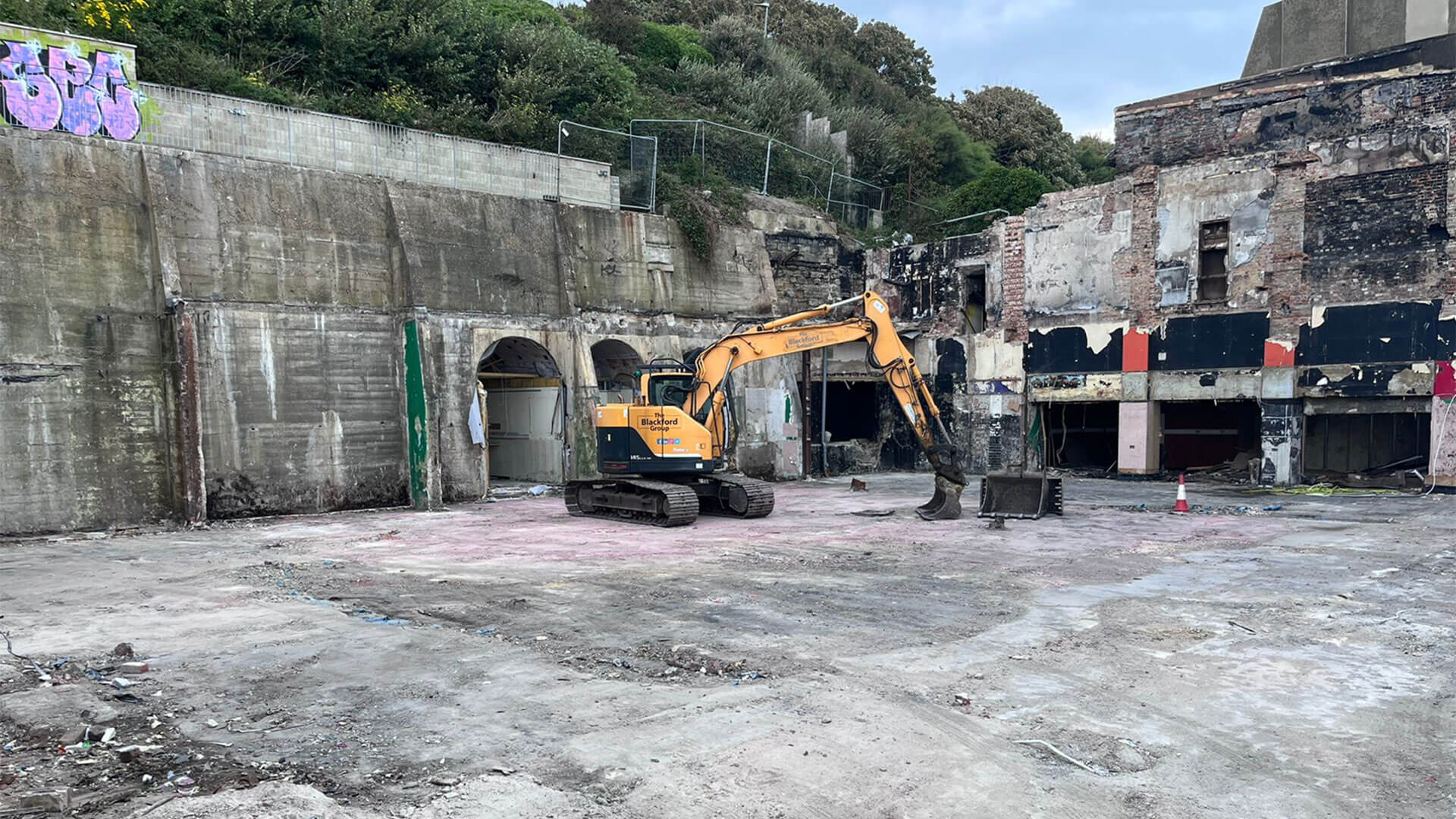
Maidstone, Kent
Demolition and Groundworks in Maidstone
Demolition, groundworks and muck away in Maidstone and mid Kent. Own plant, own fleet, every stage in-house. Call The Blackford Group on 01424 830613.
Working in Maidstone
Demolition & Groundworks in Maidstone
Maidstone is the county town of Kent and it behaves like one. The River Medway cuts straight through the middle, the M20 runs along the northern edge with junctions 5, 6, 7 and 8 all feeding the town, and the A20, A26, A229, A249 and A274 fan out from the centre towards Ashford, Tonbridge, Chatham, Sittingbourne and the Weald. Our yard is at Upper Wilting Farm, St Leonards-on-Sea, and the run north is the A21 and then the A229 through Cranbrook and Staplehurst, roughly 35 miles of main road for our plant and our lorries rather than an awkward cross country trip.
The building stock changes every few streets, and that changes the job. Around the centre there are Victorian terraces, older shops and offices along Week Street, Earl Street and the High Street, and listed stone buildings by the river including the Archbishop's Palace and All Saints Church. Move outwards and you find interwar and postwar semis, then the larger estates at Shepway, Parkwood, Grove Green and Downswood, then ragstone cottages, oast houses and farm buildings once you reach the villages. A great deal of it went up well before 2000, which matters for asbestos, for what is actually holding a structure up, and for what you find under a slab once it is lifted.
Development in Maidstone tends to land in a handful of places. Maidstone Borough Council is the planning authority for the town and the villages around it, and growth has been concentrated on the edges, along the Sutton Road corridor to the south east and the Hermitage Lane corridor at Barming, alongside infill, conversion and change of use in the centre. There is also brownfield land in the Medway valley: former paper mill ground at Tovil and Aylesford, old ragstone quarry land south and west of the town, and tired yards, sheds and depots on the estates at Parkwood, Quarry Wood and Larkfield. Sites on that north west edge sit in Tonbridge and Malling rather than Maidstone, and Kent County Council works from County Hall in the town as the highway, minerals and waste authority, so most jobs end up dealing with more than one council.
That mix is why a Maidstone site rarely goes exactly the way a drawing says it will. A dig on the ridge can hit Kentish ragstone hard enough to need a breaker or a rock saw rather than a bucket. A plot a few miles further south can sit on shrinkable clay that wants deeper foundations or piles. A site near the river can be on soft alluvium inside a flood plain, with the Environment Agency to satisfy before anything is stripped. We work all of that out before the machines arrive, because it drives the muck away volumes, the foundation design and how long plant needs to be on site.
Our services
What We Deliver in Maidstone
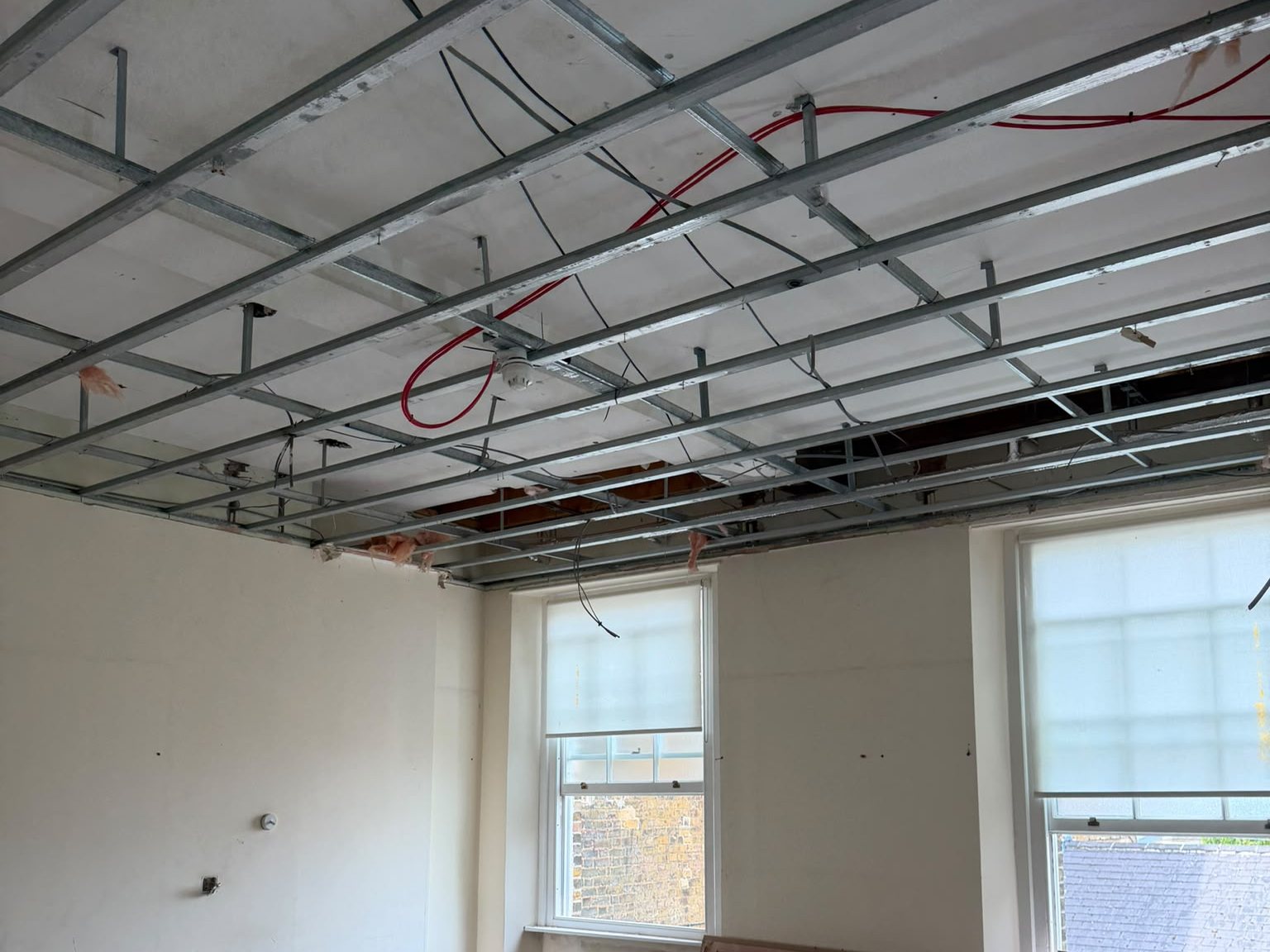
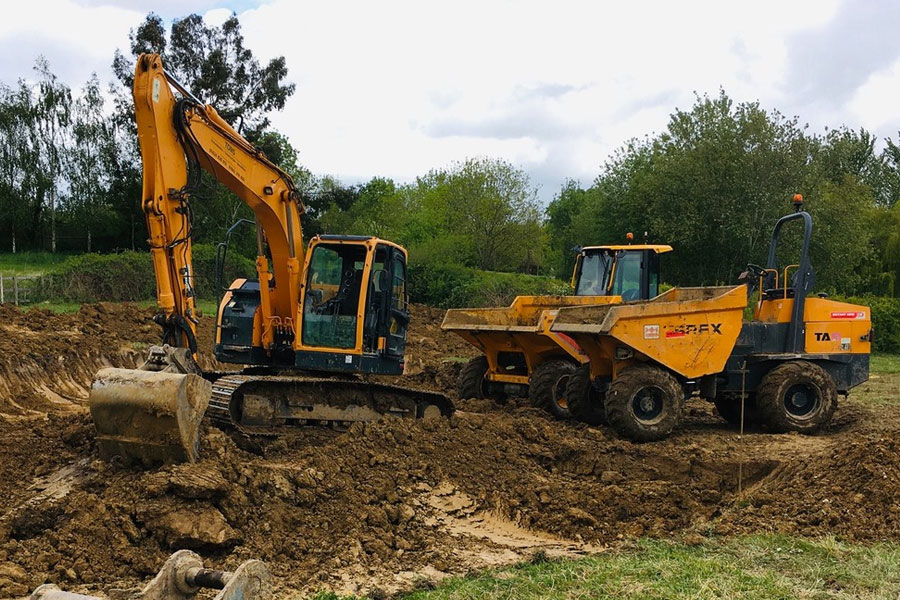
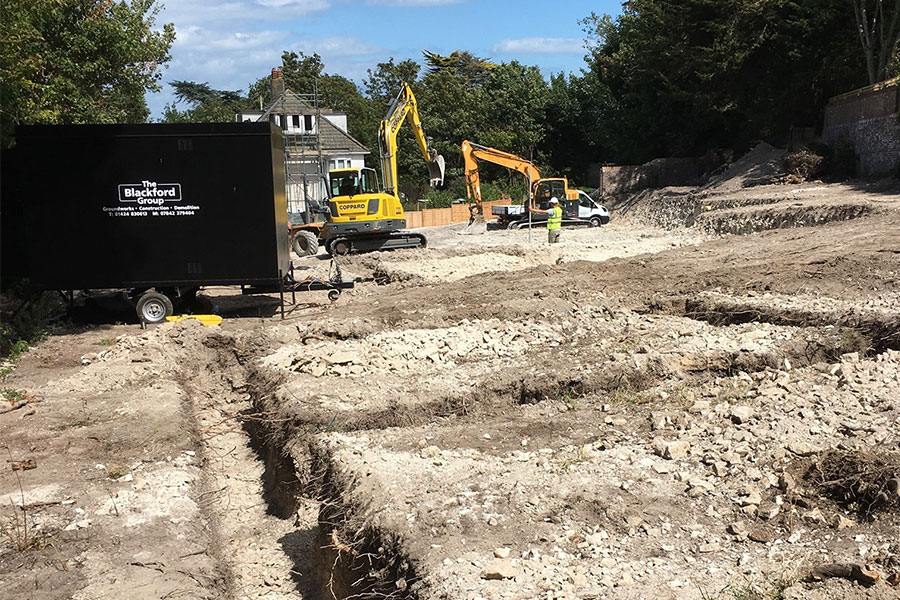
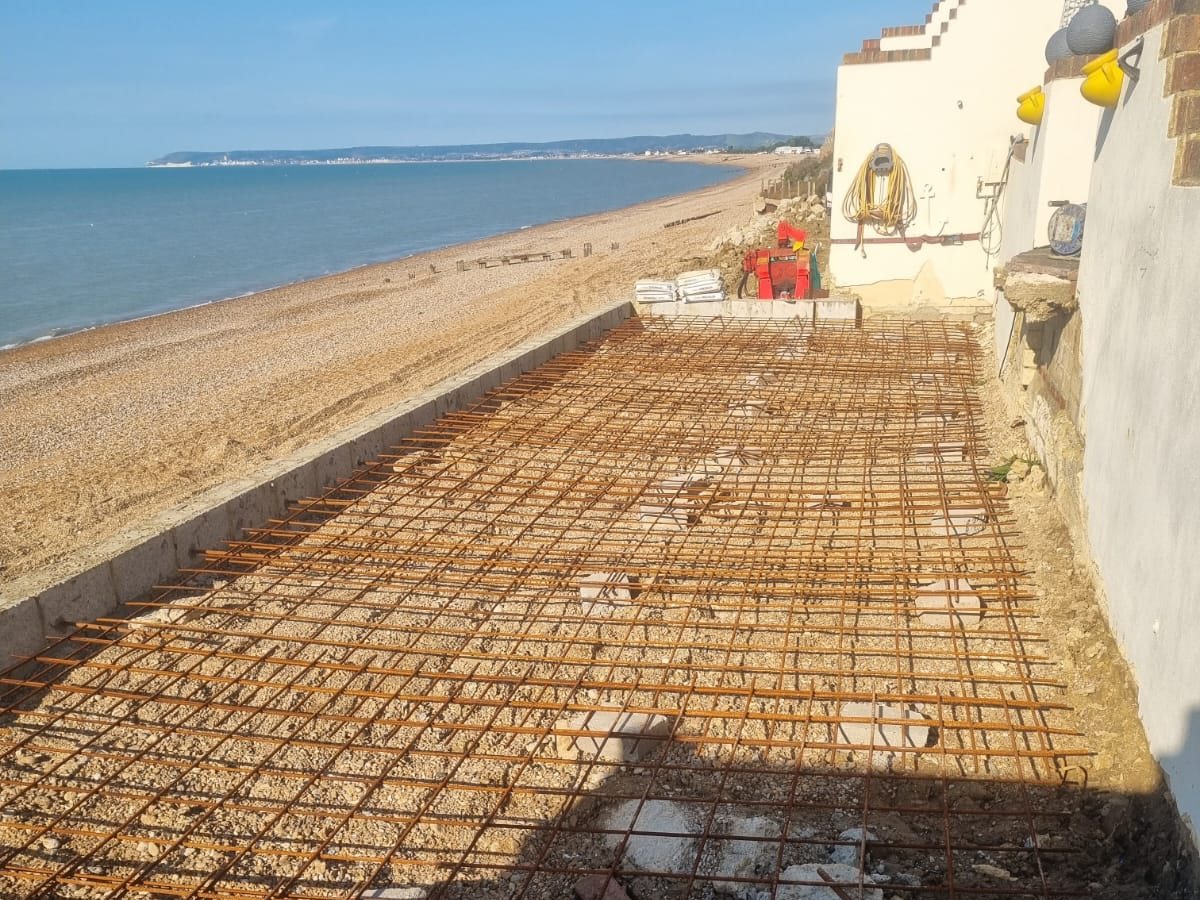
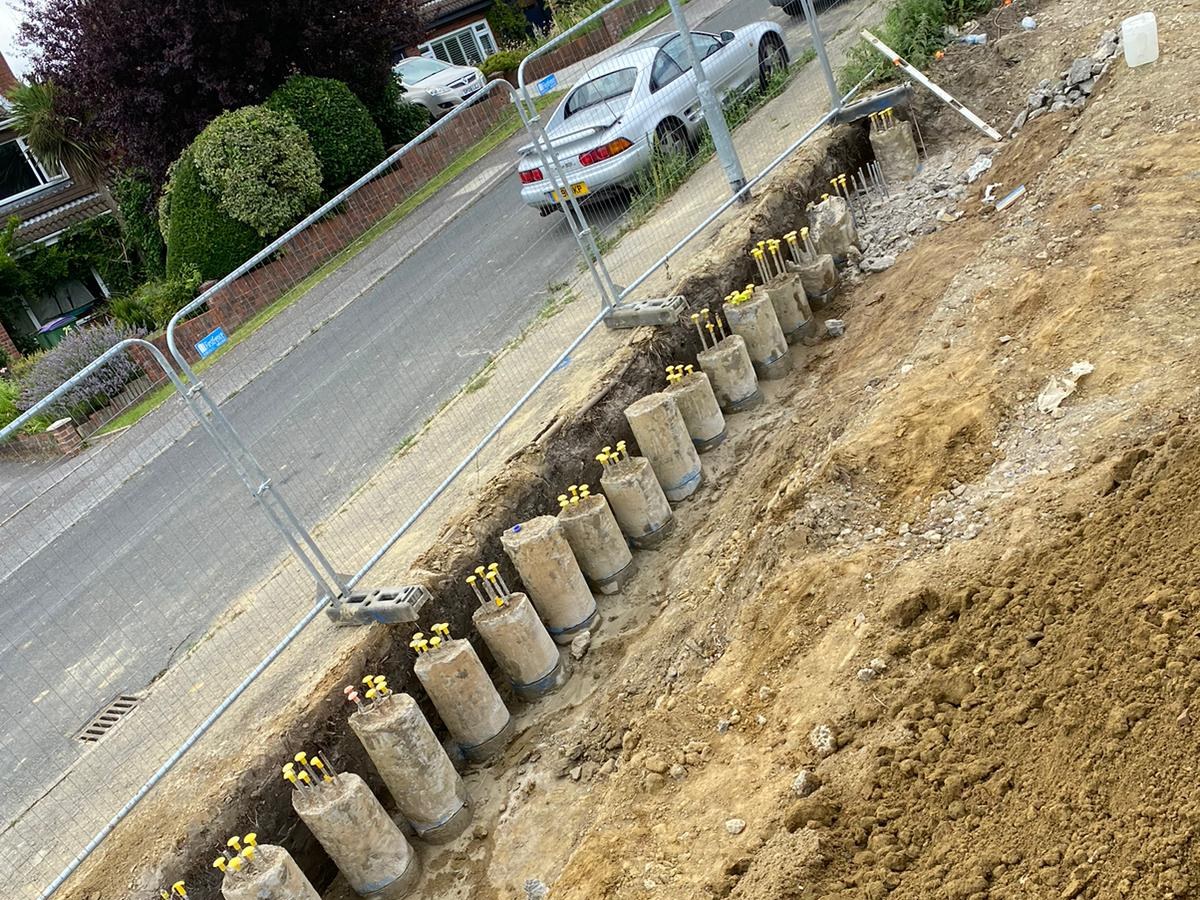
The Blackford Group runs eight divisions: Demolition, Strip Out, Groundworks, Site Enabling and Remediation, Haulage and Muck Away, Sea Defence, Piling, and Underpinning. On a Maidstone project that means one company takes the site from the first survey to a plot ready for the next trade, using our own plant and our own fleet at every stage. Nobody is waiting on a subcontractor's diary to break out ragstone, get lorries loaded, deal with contaminated made ground or drive piles. It also means one point of contact, one method statement and one programme, which counts for a lot when the site is on a tight street or inside a flood plain and the sequence has to hold together.
On the ground
What Maidstone Sites Actually Need.
Ragstone, Chalk and Clay in One Town
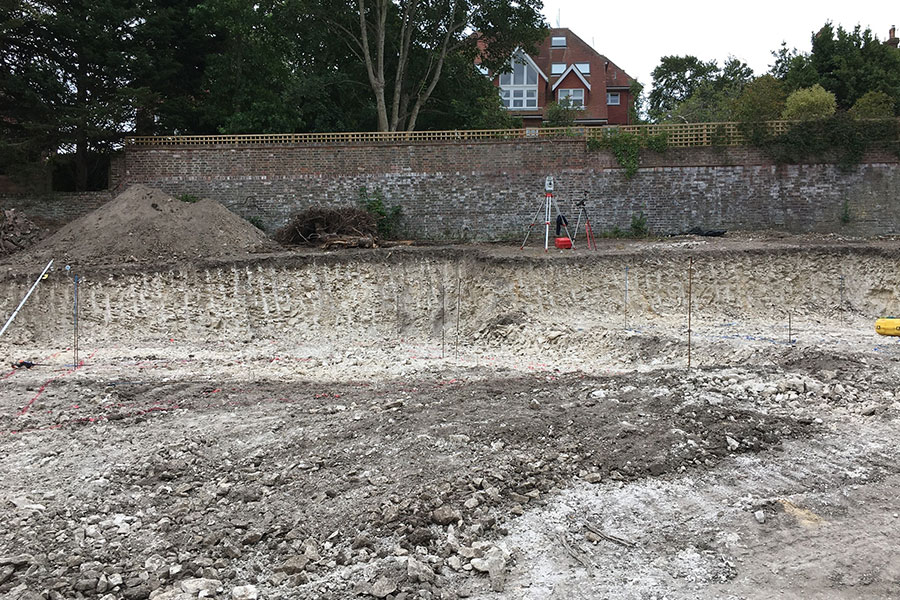
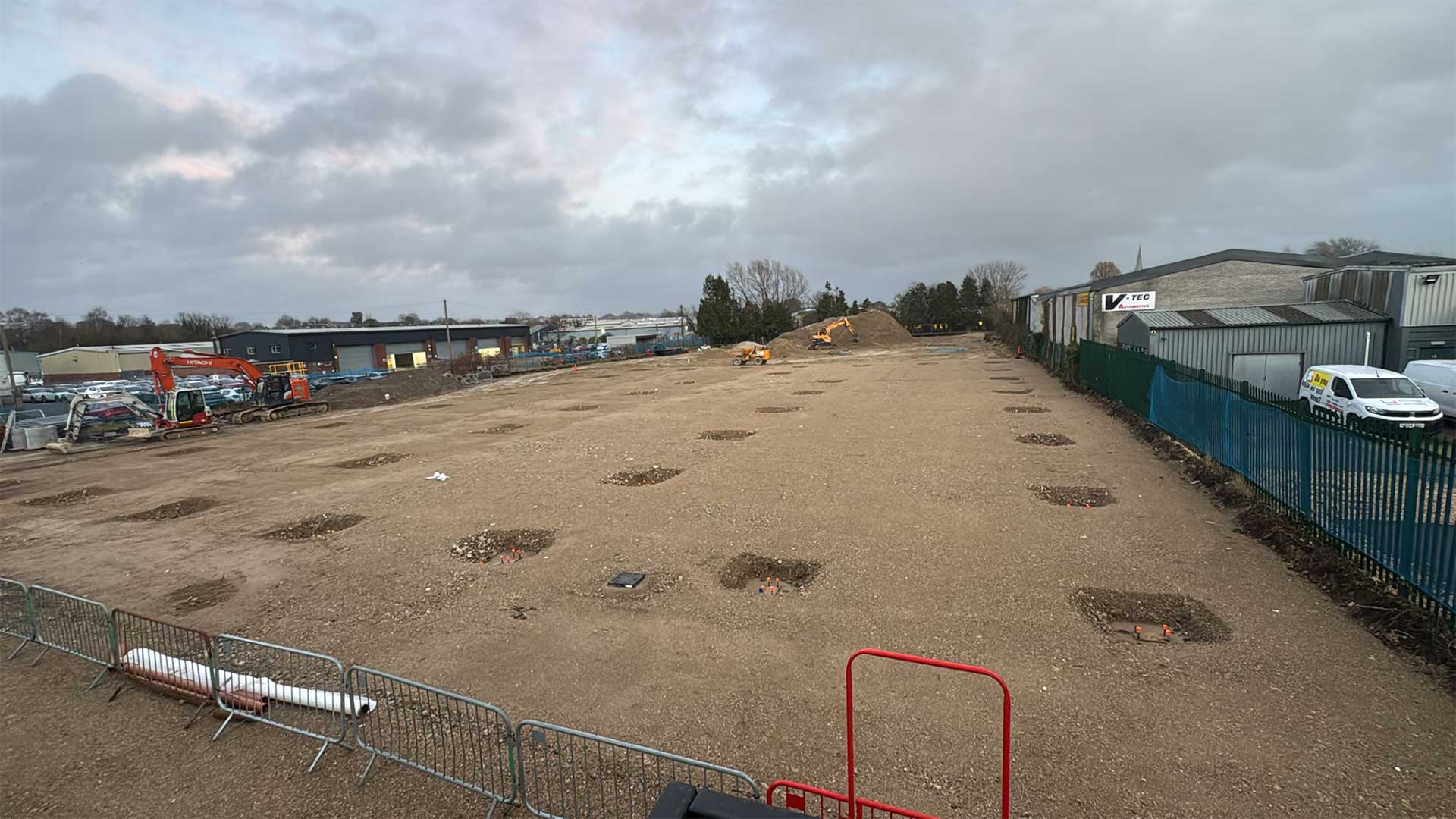
Maidstone sits where three very different grounds meet. Much of the town is on the Hythe Formation, the Kentish ragstone quarried for centuries around Boughton Monchelsea and Allington, and it can be hard enough to stop a standard dig and call for breakers or a rock saw. North of the town the Downs are chalk. Head south past the greensand ridge and you drop onto the clay of the Weald around Marden, Staplehurst and Yalding, with a band of Gault Clay along the foot of the Downs as well. Clay like that shrinks and swells with the seasons, and it is a common reason for cracked extensions and shallow foundation failure. Old quarry ground and backfill turns up in places too. We check what is actually under a plot before we price the dig, because ragstone spoil, chalk and clay behave differently in the ground, on the lorry and at the tip.
The Medway, Drainage and Old Mill Land
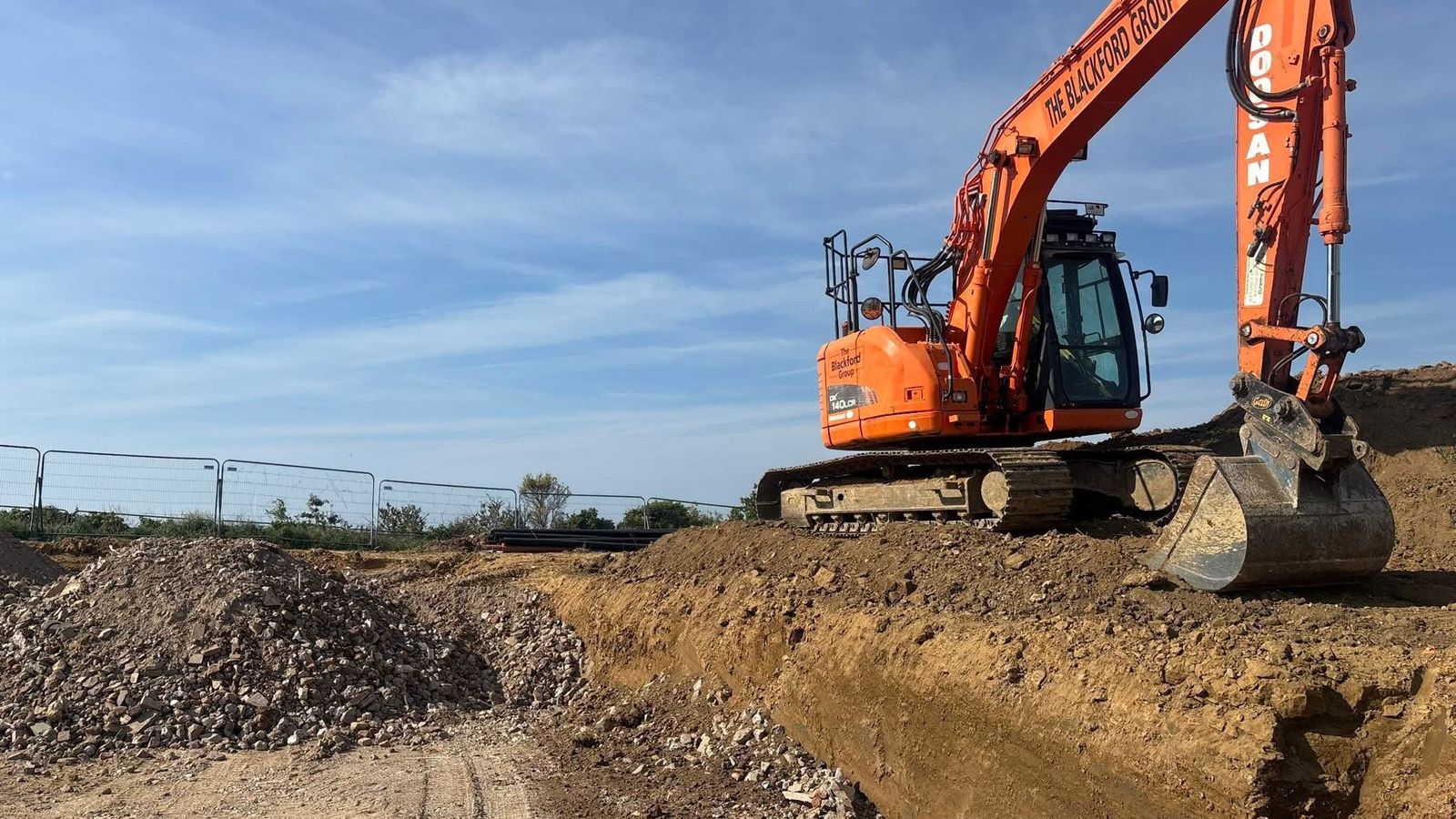
The river runs right through the middle of Maidstone, and floods have reached the town centre, Tovil, East Farleigh and Yalding in living memory. Below Allington Lock the Medway is tidal. Anything close to a main river brings the Environment Agency into the conversation, along with limits on where spoil and plant can sit and how surface water is dealt with once ground is sealed or opened up. Former paper mill, quarry, yard and depot land in the valley can also carry made ground, buried tanks, oils or asbestos. We test, plan the remediation and get the material off site properly rather than finding it halfway through a dig.
Town Centre Access, Conservation Areas and the M20
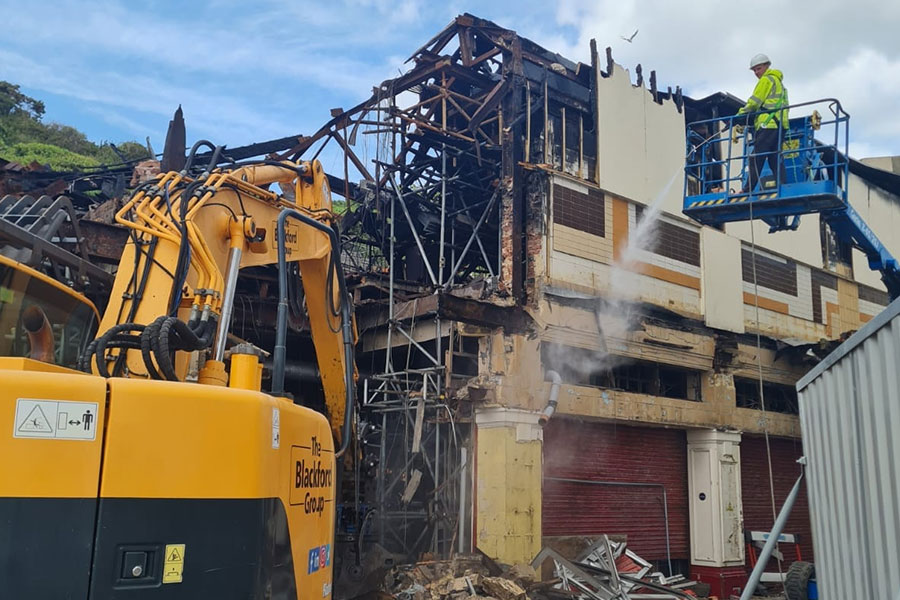
The centre of Maidstone runs on a busy one way system with narrow side streets, and the town has several conservation areas plus listed buildings around All Saints, Earl Street and the riverside. Getting a machine in, and getting muck out, often means a road closure, a licence or a permit through Kent County Council as highway authority, plus planning and conservation input from the borough council. Out in the villages the constraint is the opposite problem: narrow lanes, weight limits and blind bends. The M20 is also the main lorry route to the Channel ports, so hold ups there can move delivery times. We plan haulage routes and delivery windows around all of it.
Where we work
Areas We Cover Around Maidstone
Bearsted
Village green, conservation area and a mix of period cottages, interwar houses and newer closes, with its own station and quick access to M20 junction 7. Suits careful residential work where neighbours are close and the street is narrow.
Aylesford
An old village with a medieval bridge and The Friars, beside the Quarry Wood and Larkfield industrial areas and land once used for paper making. Industrial demolition, strip out and remediation suit it better than small domestic jobs.
Tovil
The valley just south of the town centre, shaped by its paper mill history and hemmed in by the Medway. Brownfield clearance, hard standing removal and flood aware groundworks are the usual jobs here.
Barming
Home to Maidstone Hospital and the Hermitage Lane corridor, one of the busiest areas for new housing on this side of town. Site clearance, enabling works, drainage and access roads all feature.
Coxheath
A large village on the ridge south of Maidstone with plenty of postwar and modern housing plus some generous plots. Good ground for knock down and rebuild schemes, outbuilding demolition and new foundations.
Loose
A conservation area built around a stream and the remains of old mills, with listed ragstone cottages and steep, tight lanes. Work here means small plant, careful methods and close liaison with the conservation officer.
Allington
Riverside land by the lock, which marks the tidal limit of the Medway, alongside older industrial and waste ground. River walls, hard standings, remediation and heavy muck away all come up in this pocket.
Boughton Monchelsea
Ragstone country with a long history of quarrying, and rural plots looking south over the Weald. Expect hard rock in the dig, old quarry backfill in places and rural access to plan around.
Detling
On the North Downs above the town, near the Kent Showground and M20 junction 7, so chalk ground rather than ragstone. Barn conversions, agricultural demolition and hard standing works are common.
Yalding and East Farleigh
Orchard and oast country where the Medway meets the Beult and the Teise, and one of the most flood prone corners of Kent. Levels, drainage and flood resilience have to be built into the groundworks from the start.
Who we work for
Clients We Look After in Maidstone
Commercial and Retail
Shops, offices, pubs and older commercial units around the Maidstone centre and along the main approach roads. We handle soft strip and full strip out ahead of a refit, structural demolition of dated units, temporary works and propping where a facade or party structure has to stay, and the groundworks that follow once the plot is clear. Town centre sites usually need hoarding, dust and noise control, pedestrian management and tight delivery slots, so the method statement matters as much as the machine.
Industrial and Brownfield
The estates at Parkwood, Quarry Wood and Larkfield, along with former mill and quarry ground in the Medway valley, tend to involve steel frames, concrete slabs, asbestos cement roofs, tanks and made ground. We take on full industrial demolition, site enabling and remediation, crushing and reuse of arisings where it makes sense, bulk muck away with our own lorries, and the piling and foundations that follow. One contractor, first survey to a level, tested plot ready to build on.
Residential and Private Clients
From a single garage or outbuilding through to knock down and rebuild plots in Coxheath, Bearsted or Boughton Monchelsea, and multi plot housing schemes on the edges of town. We do house demolition, internal strip out, foundations, drainage, driveways, retaining walls and underpinning where movement on shrinkable clay has taken hold. Neighbours are usually close in Maidstone, so we work clean, keep the road tidy and tell people what is happening and when.
FAQs
Maidstone Questions
The things people in Maidstone ask us most. If your question is not here, call 01424 830613 and we will answer it straight.
Do you actually cover Maidstone, or only the coast?+
We cover Maidstone and the villages around it, and we work nationwide from our yard at St Leonards-on-Sea. Maidstone is a straightforward run north on the A21 and then the A229 through Cranbrook and Staplehurst, or via the M20 depending on where the site sits, so mobilising plant here is routine rather than a special arrangement. Call 01424 830613 and we will arrange a site visit.
Who do I need permission from before demolition starts?+
Most demolition needs notice to the local council, which is Maidstone Borough Council for the town and the villages around it, with planning or conservation consent on top if the building is listed, sits in a conservation area or is being replaced with something new. Sites on the north west edge towards Aylesford and Larkfield fall under Tonbridge and Malling instead. Road closures, skips, hoardings and cranes over the highway go through Kent County Council. We will walk you through what your site needs.
My neighbour's house is attached or right on the boundary. What happens?+
That is normal in the terraces around the town centre and in the older village cores. Where work affects a shared wall, a boundary structure or the ground near a neighbour's foundations, the Party Wall etc. Act 1996 applies and notice has to be served before work starts. We plan the sequence, propping and temporary works around whatever is agreed, and we would far rather sort the detail out with a neighbour early than have a job stopped once the machines are on site.
How do you handle asbestos in an older Maidstone building?+
Anything built or refurbished before 2000 is treated as suspect until a refurbishment and demolition survey says otherwise, and that includes the asbestos cement roofs and cladding still common on older units across the industrial estates around the town. The survey is done before we start, the findings shape the method statement and the order of works, and licensed removal is arranged where the material calls for it. Nothing is broken out until we know what it is.
Where does the muck go, and can you take away hard ragstone spoil?+
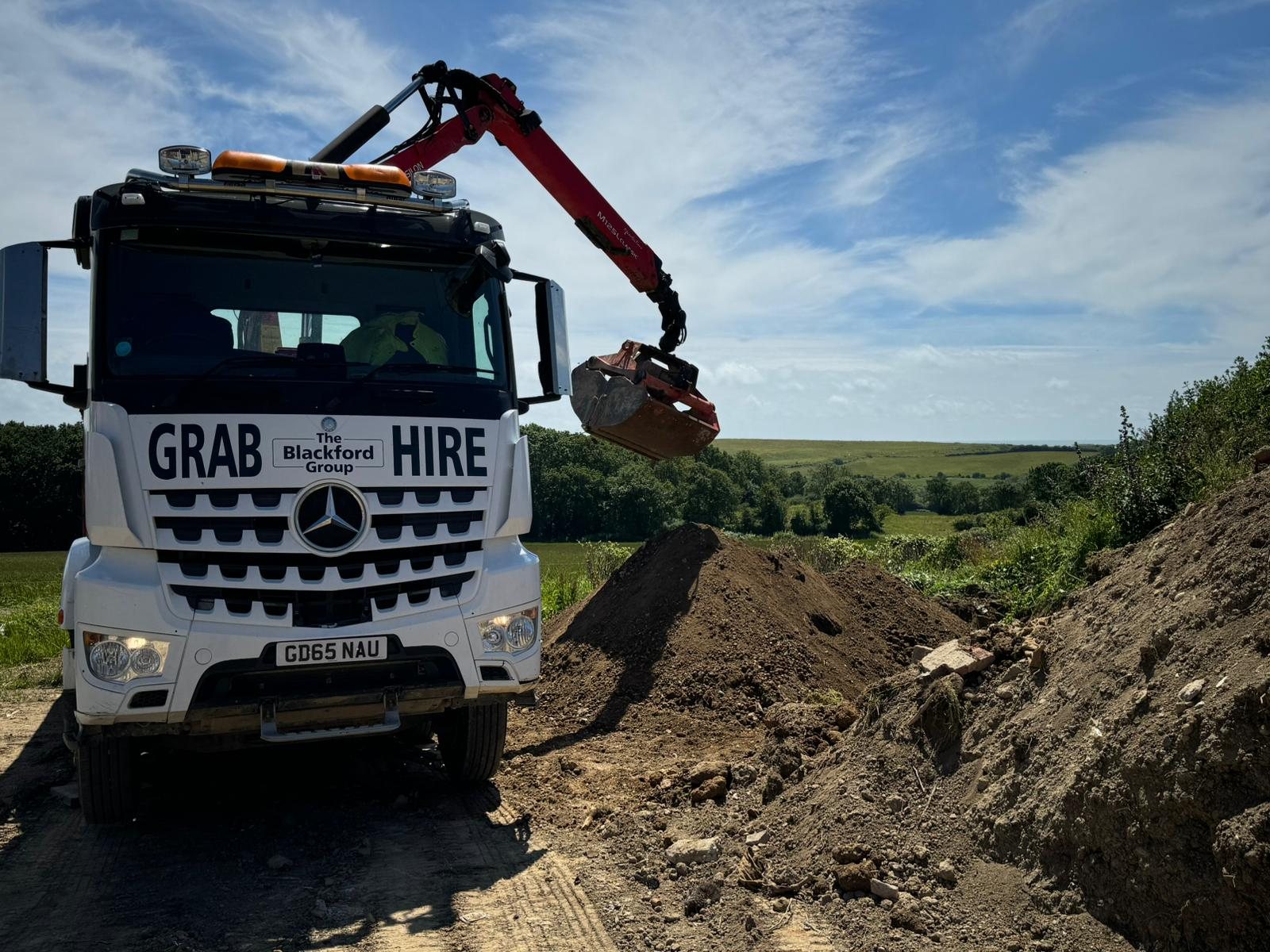
We run our own haulage and muck away, so the dig and the lorries are managed by the same team and the site does not stall waiting for wagons. Ragstone, chalk, clay and mixed demolition arisings all get handled and taken to the right permitted facility, with the duty of care paperwork to match. Where material can be crushed and reused on site as fill or a piling mat, we will say so, because it saves lorry movements through the town.
The street is narrow and there is nowhere to park a machine. Can you still work?+
Usually yes. Plenty of Maidstone work happens on Victorian terraced streets, in the lanes around Loose and Bearsted, or behind a shop on the one way system, so we size the plant to the access rather than the other way round. That can mean smaller tracked machines, hand demolition in places, a timed road closure or permit, and deliveries booked outside the worst of the traffic. We look at access on the first visit and tell you honestly what will and will not fit.
Recent Work
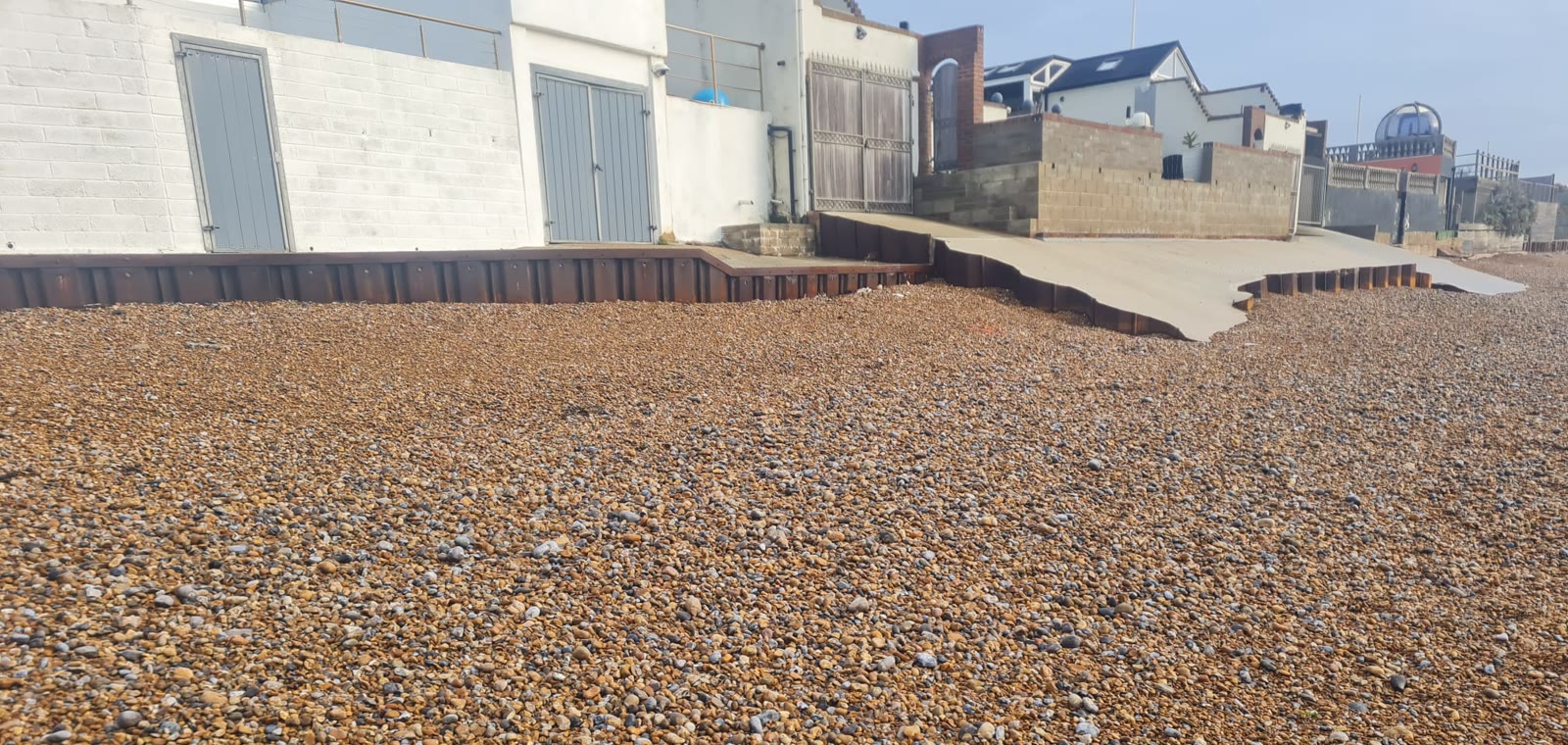
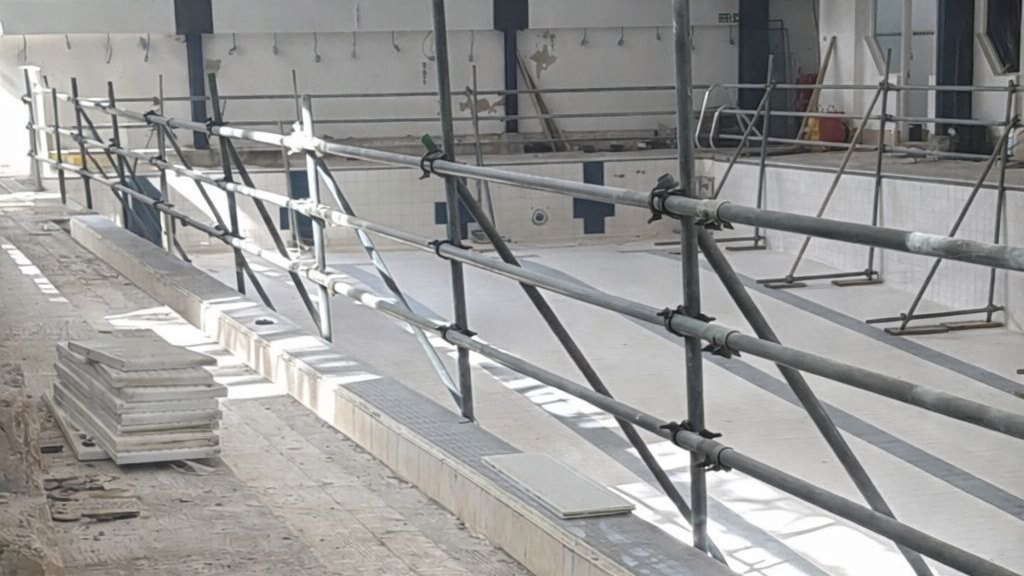
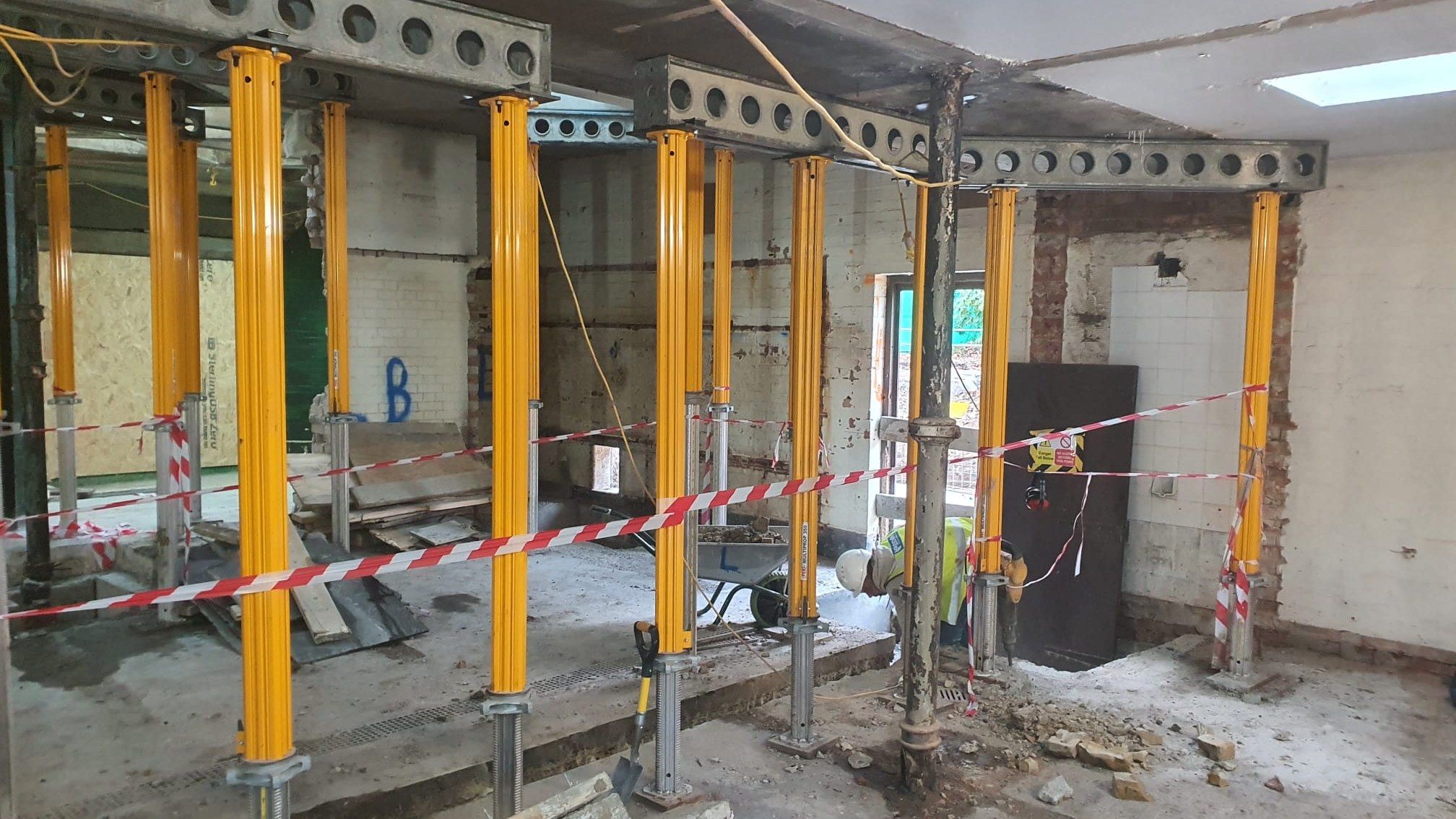
If you have a project in Maidstone, whether it is a single house coming down in Coxheath, a strip out in the town centre, an industrial unit at Quarry Wood or a full site clearance with remediation, piling and groundworks on brownfield land in the Medway valley, we are happy to come and look at it. Send over drawings or a site address and we will tell you what the ground is likely to do, what the council will want and how we would sequence the work. Call The Blackford Group on 01424 830613 to talk it through.
Planning Work in Maidstone?
Tell us what you need moving, clearing or building and we will come back with a straight answer and a fair price.