
Division 05
Muck Away and Haulage That Keeps Your Site Moving
We move spoil, muck, hardcore and demolition arisings off site with our own tippers and grab lorries, and bring in the stone and fill you need on the way back. Nationwide, from our yard in St Leonards-on-Sea.
Overview
Haulage & Muck Away, Managed In-House
Haulage and muck away is the part of a job that decides whether everything else runs to time. A dig only moves as fast as the lorries taking the spoil away, and a slab only gets poured when the stone turns up. Our haulage division works in both directions: spoil, muck, rubble and strip out arisings taken away, and aggregate, fill and topsoil brought back in. It is not glamorous work, but on most jobs it sets the pace for everything else on the programme.
Most clients come to us for one of three reasons. There is a hole to dig and nowhere to put what comes out of it. A demolition or strip out has produced far more material than a few skips will swallow. Or an earthworks package will not balance, so the surplus has to leave site and the shortfall has to be imported. All three come down to the same problem: moving a lot of heavy material, legally, without blocking the road or holding the job up.
Because we run our own plant and our own lorries, loading and haulage get planned together rather than argued over afterwards. The machine on the dig, the banksman, the lorries and the facility they are tipping at are all part of one plan, so a driver is not sat in a queue at the gate while an excavator waits for something to load. If the dig hits made ground or anything nobody expected, the same team changes the destination and the paperwork instead of the job stopping while two firms blame each other.
We take the paperwork as seriously as the lorries, because waste follows you. Under the duty of care in the Environmental Protection Act 1990, whoever produced the waste stays responsible for seeing it handled properly all the way to the end, so a cheap lorry that tips somewhere it should not becomes your problem as much as the haulier's. Loads leaving a site of ours are described accurately, taken to a facility permitted to accept that material, and covered by a transfer note or a consignment note you can file and rely on.
What we offer
Our Haulage & Muck Away Services
Bulk Muck Away and Spoil Removal
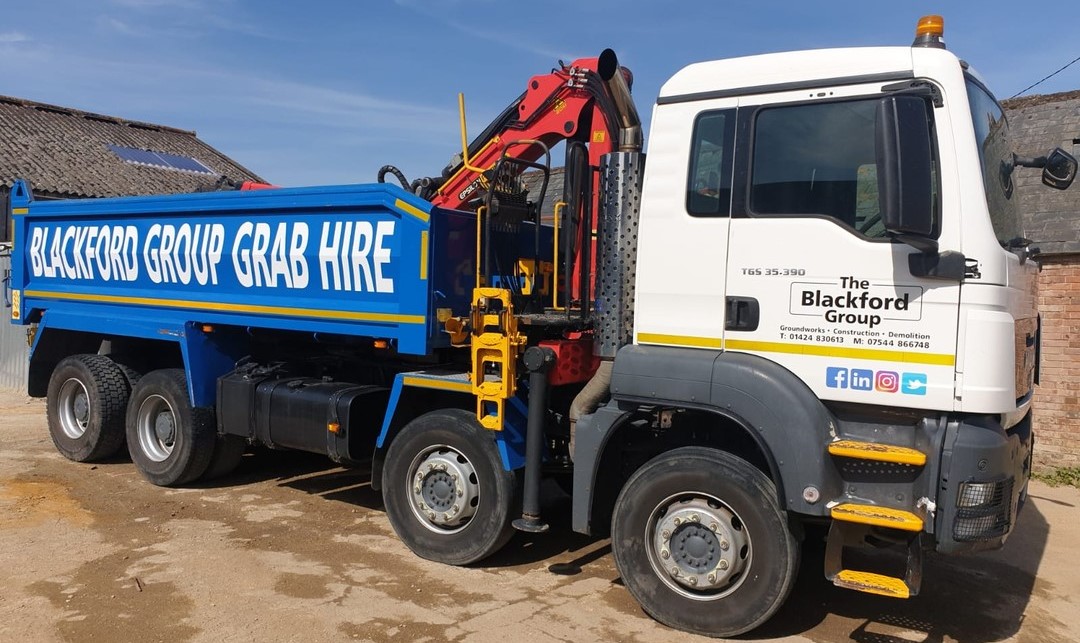
This is the everyday work of the division: lorry cover planned around a dig so the machine is not stood waiting with a full bucket. We work out the loading rate the excavator can realistically sustain, then set the lorry interval to match it, allowing for the run to the tip and the turnaround at the gate. On open earthworks that usually means articulated bulk tippers where the access allows, and 8 wheel rigids where it does not.
Grab Lorry Loading and Collection
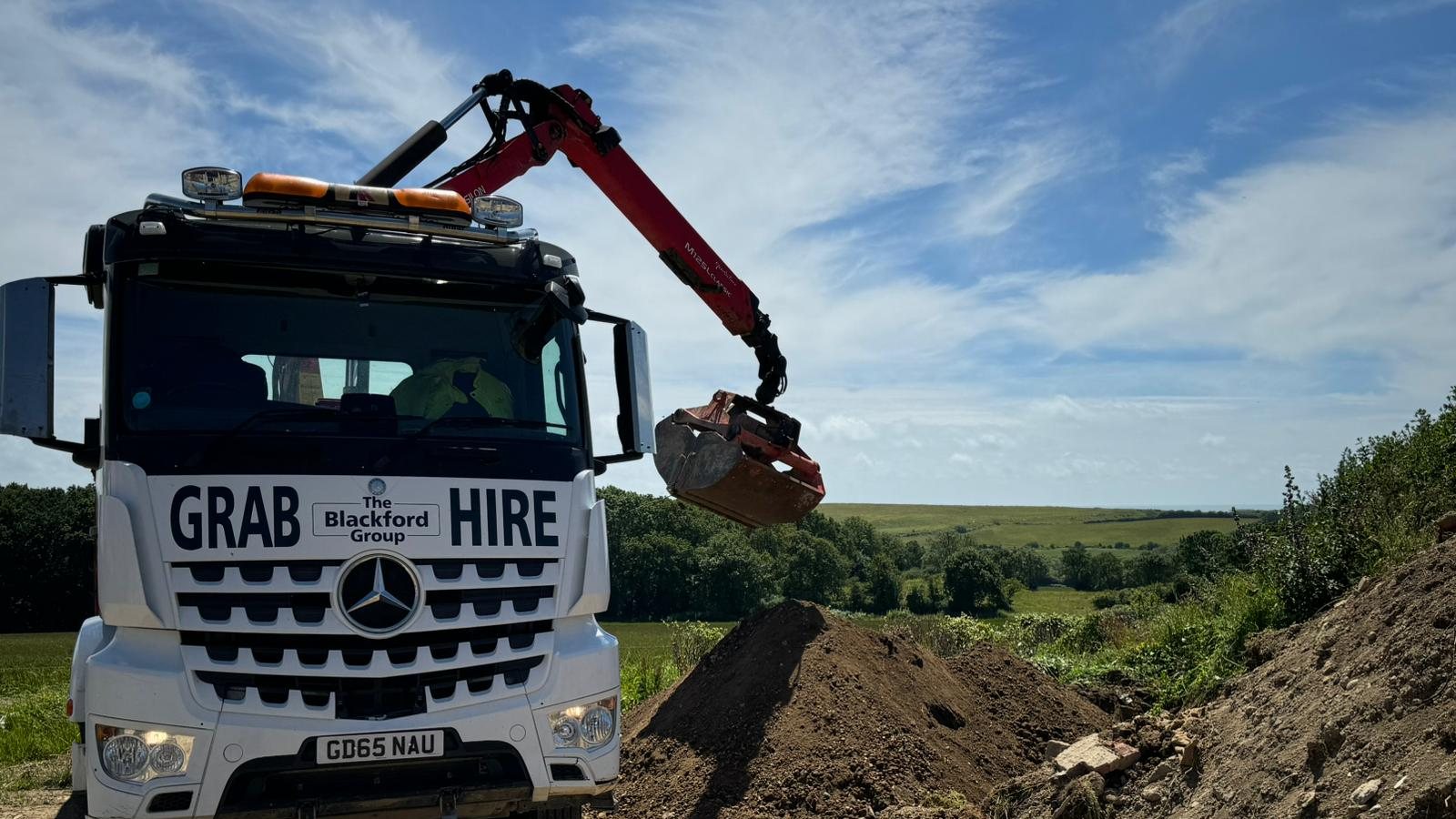
A grab lorry loads itself, which matters when a machine cannot get near the material or there is nowhere to stand one. The hydraulic grab arm reaches over a wall, along a verge or into a front garden and loads straight into the body. It suits driveway dig outs, garden regrades, muck barrowed to the front of a house and any job where hiring a separate loading machine is not worth the money.
Roll on Roll Off and Covered Containers
For light, bulky arisings the limit is volume, not weight. Roll on roll off skips take strip out material, timber, plasterboard, insulation and mixed construction waste that would fill a tipper long before it reached its payload. Covered and enclosed containers stop light material blowing about on the road, which matters on exposed sites and on any job with housing next door. Where a container has to stand on the public road, the council permit is arranged first.
Demolition Arisings and Hardcore
Broken concrete, brick, blockwork and slab take a different route to soil. Where the material is clean it can go to a recycler and come back as crushed concrete or recycled sub base, and on larger sites it is often worth crushing in place instead of paying to haul the same material twice. We keep arisings separate at the point of loading, so clean hardcore is not downgraded into mixed waste and then charged as mixed waste.
Contaminated and Hazardous Soil
Made ground, old fuel tanks, ash, asbestos in the soil and Japanese knotweed all change where a load is allowed to go. Material like that gets classified first and, where the receiving facility asks for it, sampled and tested before anything is booked in. It then travels to a site whose permit covers that exact waste, on a consignment note for anything that comes out hazardous. The cost changes as well, which is a conversation to have before the machine starts, not after.
Aggregate, Fill and Topsoil Deliveries
The lorry has to come back anyway, so it may as well come back loaded. We bring in Type 1 sub base (still called MOT Type 1 by most people), crushed concrete, 6F2 and 6F5 capping, sand, ballast, drainage stone, subsoil, and topsoil to BS 3882 where a landscape specification calls for it. Buying the muck away and the imported stone from one firm also ends the usual argument about who is paying for the extra lorry movements.
Low Loader and Plant Movements
Excavators, dozers, rollers, breakers and attachments have to reach site and get away again. We move our own plant on low loaders and beavertails, and can move plant for others as part of a wider package. Anything travelling as an abnormal load needs notice giving to the police and to the highway and bridge authorities beforehand, and that notice period has to sit in the programme rather than be discovered on the day.
Site Logistics and Vehicle Marshalling
On a tight site the haulage plan is really a logistics plan: where lorries wait without blocking a live road, how they turn without long reverses, who marshals them in and out, when deliveries are booked so two do not land together, and how people on foot are kept clear of moving vehicles. We set that out before the first lorry books in rather than working it out at the gate on the morning.
How we work
How a Haulage & Muck Away Job Runs.
Working Out Volumes and Classification
Before anything moves we need two answers: how much, and what is it. Volumes come off levels, sections or a topographical survey rather than a guess, then get adjusted because dug material takes up more room than it did in the ground, clay especially. What it is comes from the site investigation, the history of the land, and sampling wherever there is reason to expect made ground or contamination. Get this stage wrong and the rest of the job turns into a run of expensive surprises.
Finding and Booking the Right Outlet
Once the material is classified we find somewhere legally able to take it and check that the facility's permit actually covers that waste. Clean soil may suit a recycler, a soil treatment centre, or a nearby site that needs fill under a materials management plan written to the CL:AIRE definition of waste code of practice. Inert rubble usually goes to a recycling facility. Hazardous material goes to a specialist. We check the daily tonnage as well as the total, because a tip that only takes a few loads a day will throttle the whole dig.
Setting Up Loading and the Haul Route
Next comes the site itself. We agree where lorries enter and leave, how they turn without reversing across a pedestrian route, where the loading machine stands, and whether a temporary haul road, stone pad or trackway is needed to stop lorries sinking in on soft ground. Wheel washing and sweeping are set up before mud reaches the highway, not after the first complaint. Where loading has to happen off the public road, permissions and traffic management are sorted before the first lorry arrives.
Loading, Sheeting and Running the Job
With the route set, the work becomes a rhythm. The machine loads to the payload rather than to the top of the body, because an overloaded lorry is an offence and an underloaded one is a wasted trip. Every load is sheeted before it leaves, weights are confirmed at the weighbridge, and the driver carries the note for that load. A banksman controls movements on site. If ground conditions change or the outlet goes down for the day, loads get redirected rather than lorries stacking up at your gate.
Backloading, Tickets and Reconciliation
Lorries come back carrying the stone, fill or topsoil the next stage needs, and delivery tickets travel with them so what arrived can be checked against what was ordered. At the end of the job we reconcile weighbridge tickets against transfer and consignment notes, so the record shows every tonne that left the site and where it went. That pack is what you hand over if the client, the local authority or an auditor ever asks the question.
Our kit
The Plant We Bring to a Haulage & Muck Away Job.
8 wheel tipper lorries, the standard workhorse for bulk spoil, hardcore and demolition arisings where site access is reasonable.
Articulated bulk tippers for long runs and open sites, more tonnes a trip so fewer lorry movements on high volume earthworks.
Grab lorries that load themselves over a wall, off a verge or from a driveway with no room to stand a machine.
Roll on roll off skips and covered containers for light, bulky strip out and construction waste that fills the body before it reaches the weight limit.
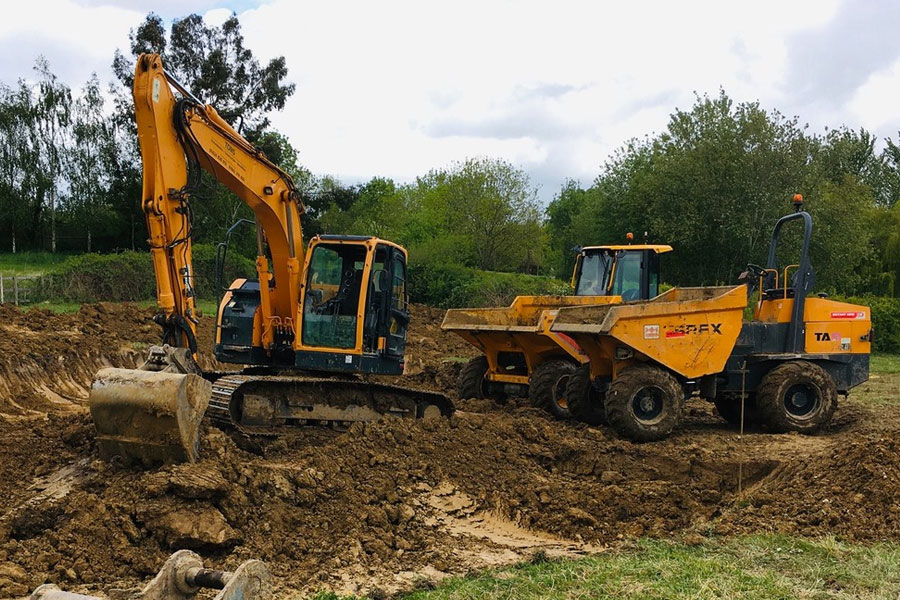
Tracked 360 excavators with loading or riddle buckets, sized to the dig, the standing available and the reach up to the lorry.
Wheeled loading shovels for quick stockpile work and loading off a hardstanding.
Site dumpers to shuttle material from the dig face to a loading point when a lorry cannot get to the work.
Wheel washing kit and road sweeping to keep mud and debris off the public highway and out of the drains.
Rules and duties
What the Law Asks of This Work.
Duty of Care: Your Waste Stays Your Responsibility
Section 34 of the Environmental Protection Act 1990 puts a duty of care on everyone who produces, holds or moves waste. In practice that means describing the material accurately, handing it only to someone legally allowed to take it, and keeping a written transfer note that both sides hold, for two years for ordinary waste and three years where a hazardous consignment note is used. Anyone carrying construction waste as a business has to be registered as a waste carrier with the Environment Agency, and that registration number belongs on the paperwork, so ask for it and check it on the public register before anything is loaded, whoever you end up using. If material from your site is later found fly tipped, the trail runs back through those notes to the person who produced it, which is why we would rather take time over the paperwork than rush it.
Hazardous Waste, Asbestos and Knotweed
Some material cannot travel on an ordinary transfer note. Waste is assessed against the Environment Agency's WM3 guidance and given a code from the List of Wastes, and anything that comes out hazardous (contaminated soil, asbestos containing material, tank arisings, oily sludges) needs a consignment note and a facility permitted for that exact waste stream. Asbestos sits under the Control of Asbestos Regulations 2012, which governs what may be done by whom, what has to be notified, and how waste is double bagged, labelled and kept apart from general arisings. Licensable asbestos work has to be done by an HSE licensed contractor, and we say so plainly rather than stretch the scope of a job. Soil containing Japanese knotweed is controlled waste too, so it either goes to a facility that will accept it or is dealt with in place under a management plan, because causing it to spread into the wild is an offence.
Vehicles, Loads and the Public Highway
Any operator running goods vehicles over 3.5 tonnes needs an operator's licence, drivers need Driver CPC, and driving time is governed by the drivers' hours rules and recorded on a tachograph. Loads have to be secured and sheeted so nothing spills onto the road, and the weight limit is a legal ceiling, not a target. Depositing mud on the public highway is an offence under the Highways Act 1980, so wheel washing and sweeping are part of the job rather than an extra. Site traffic falls under CDM 2015, which requires vehicles and people on foot to be kept apart. Greater London adds the Direct Vision Standard, with a permit and safe system requirements for HGVs over 12 tonnes, and some clients ask their hauliers to work to schemes such as FORS or CLOCS. Tell us at enquiry stage which rules apply on your site and we will tell you straight what we can put on the road for you.
Who we work for
Haulage & Muck Away for Every Kind of Client.
Commercial and Main Contractor Sites
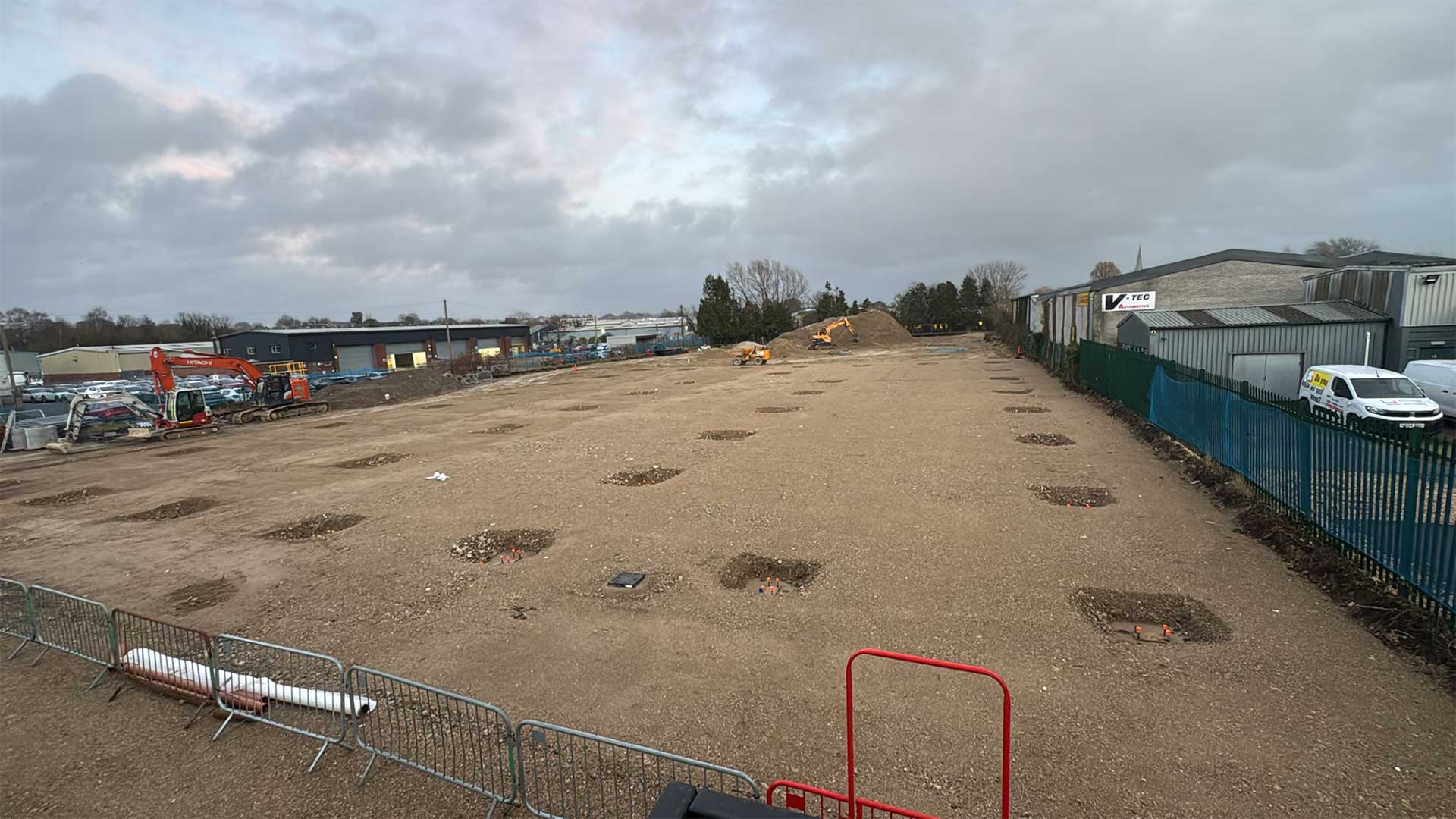
On a commercial site the haulage is measured against the programme. Deliveries and muck away have to fit booked slots, the gate cannot be blocked, and neighbours and the local authority notice every lorry that turns up. We plan movements around the site rules, keep loads sheeted and the road swept, and give the site manager a straight answer on how many lorries are running and when, so the dig, the piling rig and the concrete pours are not all fighting over the same access point.
Industrial, Remediation and Earthworks
Bigger volumes and dirtier ground. Industrial land throws up made ground, oil contaminated soil, ash, foundry sand and old tank surrounds, and every one of those changes the outlet and the paperwork that goes with it. This is where proper classification and testing earn their keep, and where reusing material in place under a materials management plan can take a great many lorry movements off the road, provided the ground conditions and the design allow it.
Residential and Domestic Work
For a homeowner or a small builder, muck away usually means a driveway dig, a basement, a garden regrade or a garage coming down, on a street with parked cars and very little room to work. A grab lorry often suits that better than a tipper plus a hired machine, because it loads from the road in one visit. We will tell you honestly whether the job wants a lorry or a skip, and sort the council permit if anything has to sit on the public highway.
On site
Haulage & Muck Away in Action
FAQs
Haulage & Muck Away Questions
What does muck away actually mean?+
It is the trade term for taking spoil and waste off a site: soil from a dig, rubble and hardcore from a demolition, or mixed arisings from a strip out. It covers the loading, the lorries, the charges at the receiving facility and the waste paperwork that has to travel with each load. Most people ask for muck away when they have run out of room for skips, or when the volume is simply too big for skips to make sense.
How many lorry loads will my job need?+
We work it out from the volume rather than guessing. Send the dimensions or the drawings and we can calculate the in situ volume, then add for bulking, because dug material swells once it is loose and fills more of the body than the hole suggests. Material type matters as much as volume: heavy wet clay hits the weight limit before it fills the lorry, while light demolition and strip out waste fills the body first.
My site has tight access. Can you still take material away?+
Usually, yes. The options include a grab lorry that loads from the road over a wall or a hedge, smaller rigid tippers where an 8 wheeler cannot turn, or a dumper shuttling material from the back of the property to a loading point at the front. On genuinely tight jobs we will come and look before quoting, because a lorry that cannot turn round is worse than no lorry at all. We also arrange any permission needed to load from the public highway.
What happens if the soil turns out to be contaminated?+
We stop, look at it properly and get it classified rather than carrying on and hoping. That means assessing the material against the waste classification guidance, coding it correctly, and sending samples for testing where the receiving site needs results before it will accept a load. Contaminated and hazardous material then goes to a facility permitted to take that specific waste, on a consignment note rather than an ordinary transfer note. It changes the cost, so you hear about it before anything moves.
What paperwork do I get with the loads?+
A waste transfer note for non hazardous loads, a consignment note for hazardous ones, and weighbridge tickets showing the tonnage that went into each facility. Together they show what left your site, who carried it and where it was tipped. Keep them safe: the duty of care under the Environmental Protection Act 1990 makes the producer responsible for waste being handled properly, and those notes are the evidence that it was.
Can you deliver stone and fill as well as take waste away?+
Yes, and it is normally the cheaper way to run a job. The same lorry that takes spoil off site can come back with sub base, capping, crushed concrete, sand, ballast, drainage stone, subsoil or topsoil. Fewer empty runs means fewer chargeable movements, and one firm is answerable for both the export and the import, so nobody is blaming another supplier when the stone has not arrived.
Do you only work in East Sussex?+
The yard is at Upper Wilting Farm in St Leonards-on-Sea, but the fleet works nationwide and travels for larger packages. Distance mainly affects how many trips a lorry can do in a day and which tips or recycling facilities make sense, so on a job away from base we look at local outlets and, where the volumes justify it, keep plant and lorries on site for the duration. Ring 01424 830613 with the postcode and we will tell you what is realistic.
If you have a dig starting, a demolition producing more material than you can store, or an earthworks package that will not balance, send over the drawings or just the dimensions and tell us what you think is in the ground. We will work out the volumes, tell you where the material can legally go, and set out what we can bring back on the return leg so the lorries are not travelling one way empty. You get a price built on the volumes, the material and the outlet, with the assumptions written down so you can see what would change it. Call 01424 830613 or send an enquiry through the contact form and ask for the haulage team.
Need Haulage & Muck Away?
Tell us what you need moving, clearing or building and we will come back with a straight answer and a fair price.