
Division 02
Strip Out Demolition in East Sussex, West Sussex, Kent and Nationwide
We take buildings back to bare structure: ceilings, partitions, finishes, kitchens, plant and services out, waste sorted and documented, floors swept and ready for the next trade.
Overview
Strip Out, Managed In-House
Strip out is everything that comes out of a building before the new work goes in. Suspended ceilings and their grid, metal stud partitions and dry lining, doors, frames and joinery, carpet tiles, vinyl and screed, sanitaryware, shop fittings and kitchens, and the mechanical and electrical services threaded above and behind all of it. Done properly it leaves a clean, dry, safe shell that a design team can survey accurately and a fit out contractor can price with confidence, with anything that has to stay clearly marked and protected before the next trade arrives.
Most clients come to us at one of four moments. A lease has ended and the space has to go back to the landlord in the state the dilapidations schedule and the licence for alterations set out. An office, shop or restaurant is being refitted for a new occupier. A building is changing use, so a print works becomes flats or a bank becomes a bar. Or the building is coming down altogether and the strip out is simply the first phase of the demolition. The scope, the sequence and the paperwork are different in each case, and the reinstatement wording in a lease often decides whether something stays or goes.
Strip Out is one of our eight divisions and we run it with our own people, our own plant and our own tippers and grab lorries. Before we price anything we walk the building with the drawings in hand: lift ceiling tiles, open floor boxes and risers, read the asbestos survey line by line, and work out what is genuinely structural and what only looks structural. That is where strip out jobs go wrong, and it is far cheaper to find a steel hidden inside a stud wall in week one than in week six.
Strip out looks like the simple part of a project and it is usually the part that catches people out. A building that went up or was last refurbished before 2000 can hold asbestos in ceiling tiles, textured coatings, boiler and flue insulation, floor tiles and the black bitumen adhesive underneath them. Services are often still live long after the tenant has handed the keys back. Taking out ceilings and linings also opens up fire compartmentation at the same time as the alarm and sprinklers are being stripped. We plan for all of that up front, work to CDM 2015 and to BS 6187 where structure is involved, and tell the client what we have found as the building opens up.
What we offer
Our Strip Out Services
Soft Strip of Fit Out and Finishes
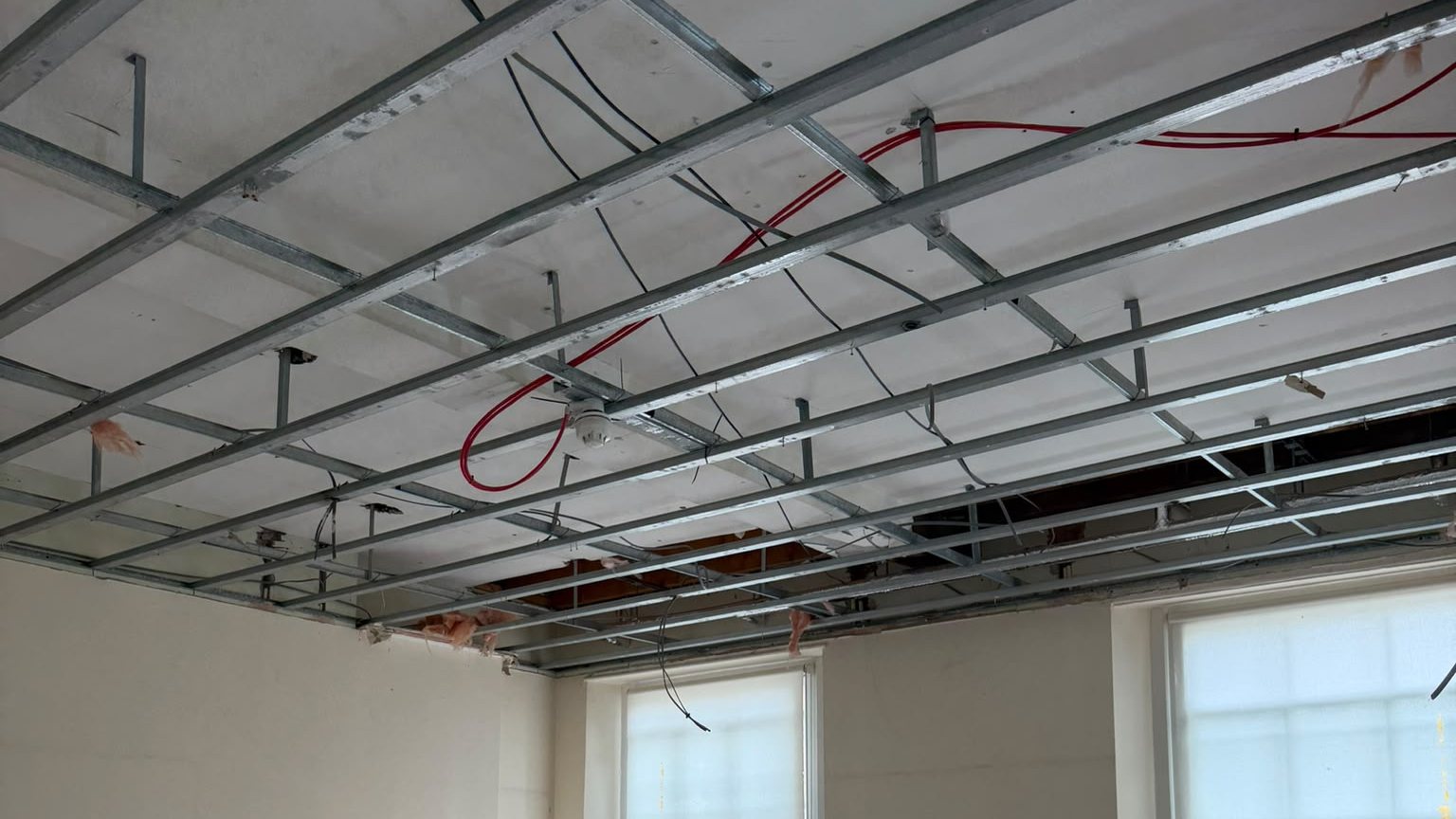
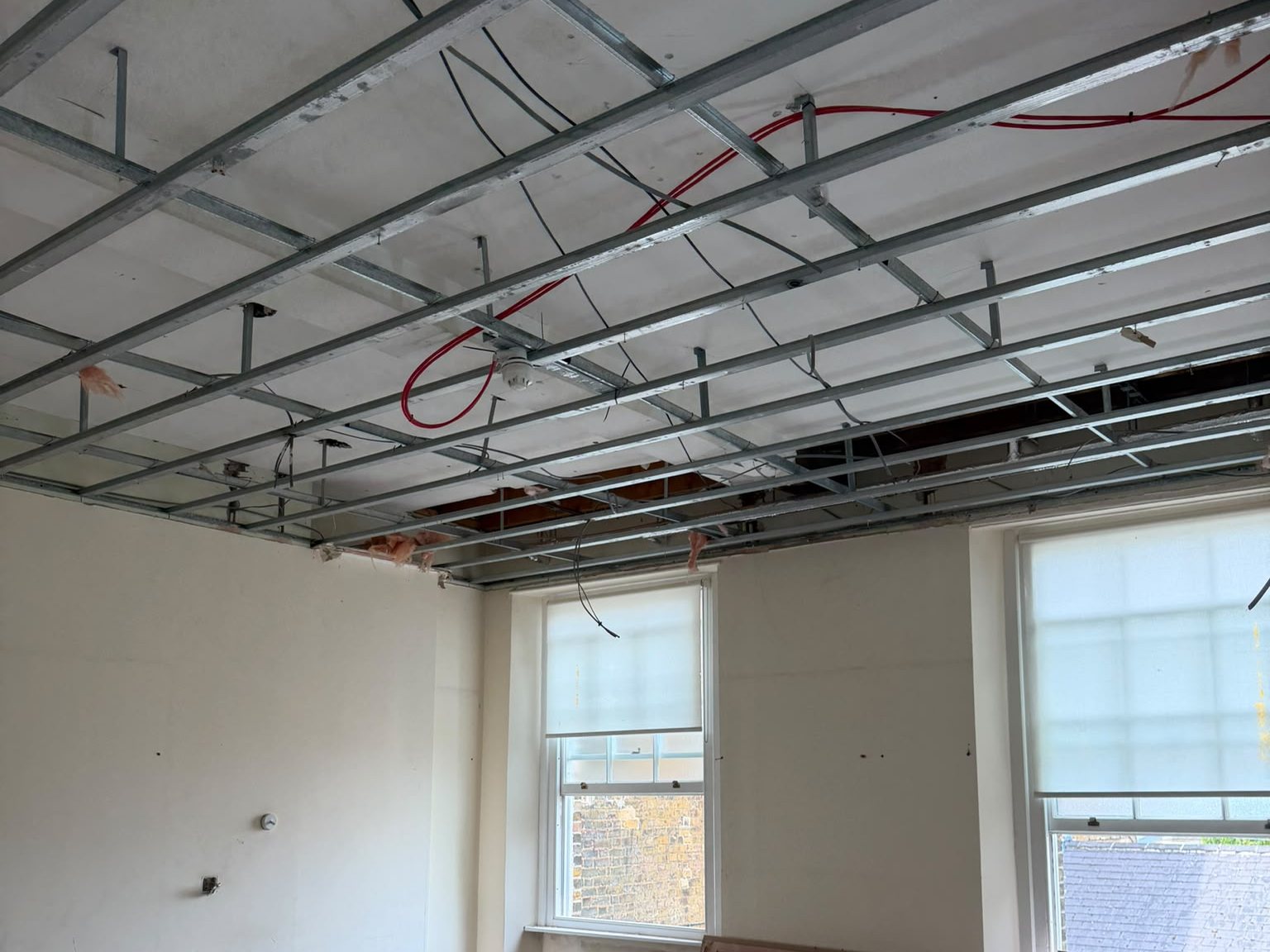
The full non-structural clearance: mineral fibre ceiling tiles with MF or exposed grid, metal stud and plasterboard partitions, glazed and demountable screens, dry lining off the walls, doors, frames and ironmongery, skirtings and joinery, carpet tiles, vinyl, raised access floors and their pedestals, WC cubicles, sanitaryware and wall tiling. We work zone by zone in a set order so the building empties in a predictable direction, the escape routes stay clear and nobody walks waste back through an area that is already finished.
Mechanical and Electrical Strip Out
Once every supply has been isolated at source and proved dead on the day, out come containment and cable, trunking, tray and busbar, distribution boards, lighting and emergency lighting, small power, data and fire alarm cabling, radiators and pipework, boilers and calorifiers, air handling units, ductwork, grilles, fan coil units and split systems. Refrigerant is recovered by a qualified engineer before anything is cut, under the F Gas rules or, on older R22 equipment, the ozone depleting substances rules. Sprinklers are drained and isolated with the insurer and the alarm receiving centre told first, and light fittings old enough to hold PCB capacitors are set aside rather than skipped.
Working Around Licensed Asbestos Removal
We do not hold an asbestos licence, we do not carry out licensed removal, and we never disturb material that might contain asbestos. A refurbishment and demolition survey comes first, and anything licensable, such as sprayed coatings, pipe lagging and asbestos insulating board in most cases, is taken out inside a sealed enclosure by a licensed asbestos contractor before we go anywhere near that area. We treat the independent analyst's clearance certificate as our green light and programme our works so the two trades never overlap. If something turns up that the survey did not record, work in that area stops until it has been identified.
Back to Shell and Back to Frame
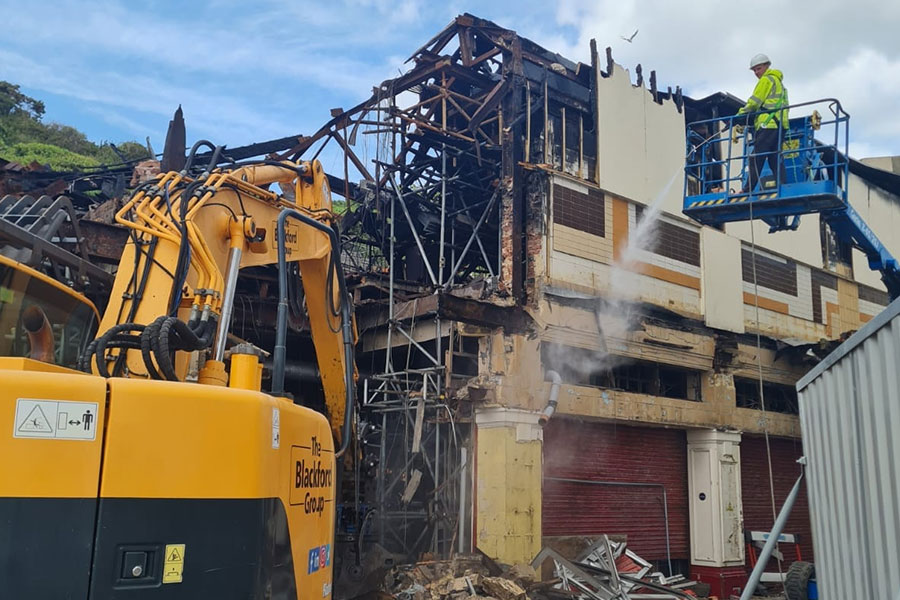
Where the client wants more than a soft strip we can take the building back to its frame: linings off, screeds up, non-load-bearing blockwork down, plinths and machine bases broken out, staircases, mezzanines and steel platforms cut and lowered. Anything that touches the stability of the building is done to a temporary works design under the kind of procedural control BS 5975 sets out, with the propping, needling and sequence checked and signed off before the first cut, and the designer back on site if what we expose does not match the drawings.
Strip Out in Occupied and Live Buildings
Plenty of strip outs happen with people still trading below, beside or above the works. We hoard off, run dust screens and negative pressure where it is needed, protect lifts, lobbies and finishes along the waste route, and agree fixed windows for noisy work and bin moves. Where the strip breaks compartmentation or takes the alarm out of service, temporary detection, a fire marshal and a revised evacuation plan go in first. Night and weekend shifts are normal on retail units, hotels and multi let offices where the neighbours cannot lose trading hours.
Kitchens, Plant Rooms and Fixed Equipment
Commercial kitchens with grease laden extract canopies and ductwork running the height of the building, cold rooms and their insulated panels, walk in freezers, bar and cellar equipment, laundry and workshop machinery, and rooftop plant with its support steelwork. Refrigerant comes out before any panel or pipe is cut. Lift cars, counterweights, guides and hydraulic rams are taken down with the lift contractor, the oil drained and removed separately and the shaft openings guarded. Heavy items are broken down in place and lowered or craned out to a lift plan rather than dropped.
Breaking Out Screeds, Slabs and Openings
Sand and cement screeds, latex, thermoplastic tiles and adhesive residues taken back to a substrate the new floor can bond to. Old tiles and the black adhesive under them are checked for asbestos before anything is lifted. Slab sections, machine bases and inspection pits broken out, and new openings formed by diamond drilling and wall sawing where noise, dust and vibration have to be kept down next to occupied space, with the slurry collected as it comes off and silica dust held down by water or on tool extraction.
Reclaim, Segregation and Waste Removal
Before the tools come out we pick off whatever is worth reusing or reselling: doors, ironmongery, radiators, sanitaryware, light fittings, raised floor panels and cable for the copper. The rest is separated on site into metals, timber, plasterboard, which cannot be mixed in with biodegradable waste, electrical items for the WEEE route, and general waste. Our own tippers, grabs and roll on roll off skips take it away, and a transfer note or a consignment note follows every load off the site.
How we work
How a Strip Out Job Runs.
Surveys, Isolations and Permits to Work
We start with the paperwork that makes the job legal and safe: the client's pre-construction information, plus the refurbishment and demolition asbestos survey and the register, read before anyone sets foot inside. Supplies are then isolated at source rather than switched off at a board. The electricity supply is disconnected by the distribution network operator and the meter removed by the supplier, with internal circuits isolated and terminated by a competent electrician. Gas is capped by a Gas Safe registered engineer, and the gas transporter disconnects at the main where the supply is going for good. Water is drained down, refrigerant recovered, sprinklers drained. Where the project is notifiable the F10 goes in, and we apply for skip and hoarding licences from the highway authority and, where noise and hours have to be agreed, prior consent from the local authority under section 61 of the Control of Pollution Act 1974.
Protection, Access and the Waste Route
Before a single ceiling tile moves we decide how the building is going to empty. Hoarding and dust screens go up, floors, walls, lift cars and lobbies along the route out get ply and correx, and a goods lift, hoist or rubbish chute into a bin or skip is set aside for the works alone. Temporary lighting and 110 volt power go in where the mains has been killed. Welfare, fire points, escape routes, a hot works permit system with a fire watch after cutting, and a fire plan that still works with the permanent alarm out of service are all in place on day one, not added later.
Hazardous Materials Out First
Anything hazardous leaves before the general strip starts. Licensed asbestos removal happens inside its own enclosure under a separate licensed contractor, and we do not restart in that area until the independent analyst has completed the four stage clearance and issued the certificate of reoccupation. Then come the smaller items people forget: fluorescent tubes and lamps, old fittings with PCB capacitors, oils, coolants and gas cylinders, batteries, lead paint and lead pipework, bird droppings in roof voids and plant rooms, and ionisation smoke detectors, which hold a sealed radioactive source and go back through a specialist route rather than into any skip.
The Strip Itself, Floor by Floor
Strip out runs top down within a space and back to front along the exit route, so nobody carries waste across an area that has already been cleared and swept. Ceilings and the services above them come first, then partitions and wall linings, then floor finishes, with mechanical and electrical taken out as each area opens up and cable pulled back to source with the containment down behind it. We work in defined zones so each one can be checked, swept and closed off, dust is caught at the tool rather than chased afterwards, and a running skip log tells everyone where the waste is going and what it is costing.
Breaking Out, Clean Down and Handover
Last comes the heavy work: screeds up, plinths and bases out, openings formed and redundant blockwork down, all to the temporary works design where the structure is involved. The building is then swept and vacuumed with M class units and left dry, lit and secure. You get the waste transfer notes and hazardous waste consignment notes, the asbestos clearance certificates, the temporary works sign off sheets, and a marked up drawing showing what has been removed, what has deliberately been left for the next trade, and which services are still live.
Our kit
The Plant We Bring to a Strip Out Job.
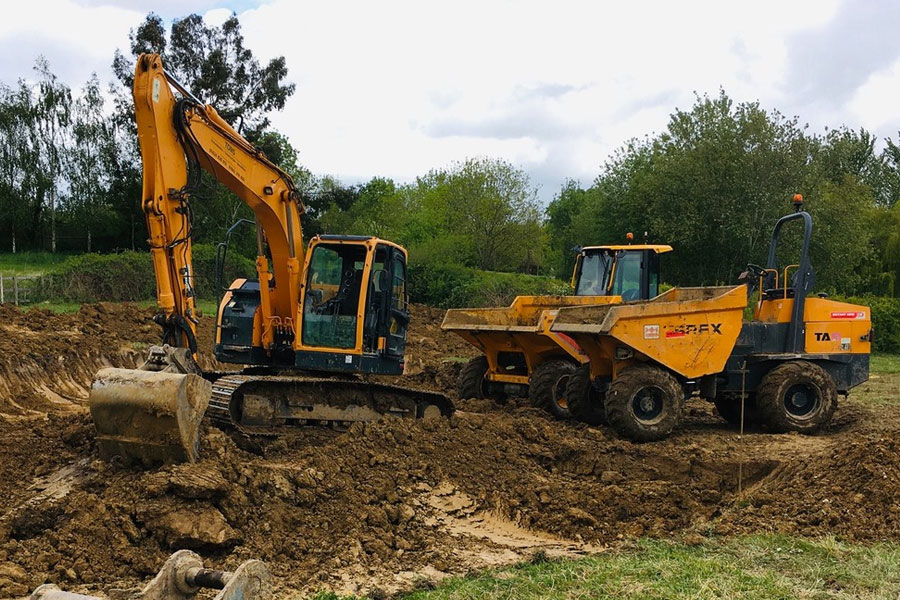
Micro excavators from around 0.8 tonne with retractable tracks, narrow enough to get through a standard doorway, and minis up to about 3 tonne where the openings allow it.
Battery and mains electric machines for work inside a building, so there are no engine fumes in a space with the ventilation already stripped out.
Compact tracked loaders and skid steers with 4 in 1 buckets and grapples, for shifting broken material to the chute or the skip.
Hydraulic breakers, pulverisers and sorting grabs on the excavators, for screeds, machine bases and redundant blockwork.
Handheld breakers, reciprocating saws, ring saws and floor saws fitted with on tool dust extraction or water suppression to keep silica dust down.
Diamond drilling and wall sawing rigs, run wet with the water caught at the blade, for forming openings without the noise and vibration of a breaker.
Electric scissor lifts, podium steps and mobile towers, for ceilings, ductwork and high level containment.
M class and H class vacuums, air scrubbers and negative pressure units, plus rubbish chutes, wheeled bins, telehandlers, roll on roll off skips and our own tippers and grabs for the muck away.
Rules and duties
What the Law Asks of This Work.
CDM 2015 and the Construction Phase Plan
The Construction (Design and Management) Regulations 2015 apply to every strip out, including work in someone's house, and they put duties on the client as well as the contractor. The client provides the pre-construction information, allows enough time and money for the work to be done safely, and where more than one contractor is involved appoints a principal designer and a principal contractor in writing. On a domestic project those client duties normally pass to the contractor, or to the principal contractor where there is more than one. No work should start until a construction phase plan is in place. A project has to be notified to the HSE on form F10 if the work will last longer than 30 working days and have more than 20 people working at once, or if it will exceed 500 person days. Where a strip out takes out structure, BS 6187 is the code of practice covering how that work is planned and sequenced, and BS 5975 covers the control of temporary works. We work to those requirements and put the plan, the risk assessments and the method statements in writing before anyone starts.
The Control of Asbestos Regulations 2012
Asbestos was not fully banned in the UK until 1999, so any building put up or refurbished before 2000 is treated as containing it until a survey says otherwise. The regulations call for a refurbishment and demolition survey before work disturbs the fabric, and they place a duty to manage asbestos on whoever is responsible for non-domestic premises, including the common parts of blocks of flats. Higher risk materials such as sprayed coatings, lagging and most insulating board can only be removed by a contractor licensed by the HSE, with at least 14 days notice to the regulator, air monitoring in place and a four stage clearance by an independent analyst before the area is handed back. Some lower risk work is notifiable but does not need a licence, and some, such as asbestos cement sheets taken down whole and undamaged, is neither. We plan around whichever applies, and if we find something the survey missed we stop work, seal the area and report it.
Duty of Care for Waste and Hazardous Materials
Under section 34 of the Environmental Protection Act 1990, whoever produces waste stays responsible for it until it reaches a properly authorised destination, and that duty cannot be handed away with the skip. Every load leaving site travels with a waste transfer note describing the material under the List of Waste codes, and hazardous items such as asbestos, fluorescent tubes, oils, batteries, paint and refrigerant travel on hazardous waste consignment notes instead. Electrical and electronic equipment goes out through the WEEE route, gypsum from plasterboard has to be kept out of any load going to landfill with biodegradable waste, and ionisation smoke detectors are radioactive waste with a separate route of their own. We segregate on site, keep the waste hierarchy in mind so reuse and recycling come before disposal, check that the carriers and the sites we use are authorised for what we are sending them, and hand you the full set of documents at the end of the job.
Who we work for
Strip Out for Every Kind of Client.
Commercial: Offices, Retail and Hospitality
Taking a Category B fit out back to Category A or back to shell, dilapidations works cut to exactly what the served schedule asks for and no further, and shop, restaurant and hotel interiors cleared between trading periods. On a multi let building we phase the work floor by floor, protect the shared lifts, lobbies and cores, book the goods lift and the loading bay, and keep the fire strategy working while the alarm, sprinklers and emergency lighting are being taken apart.
Industrial: Warehouses, Factories and Plant
Production lines, machine bases, overhead conveyors, dust extraction ductwork, compressed air lines, racking, mezzanine floors and office pods built inside a shed. Industrial buildings throw up bunded tanks, oils, coolants and old process residues that have to be drained and disposed of properly, and the work is often sequenced around part of the plant that is still running, under the site's own permit to work and isolation rules rather than ours.
Residential: Houses, Flats and Conversions
Whole house strip outs ahead of a refurbishment or extension, kitchens and bathrooms out, lath and plaster off, chimney breasts and non-load-bearing walls down, and blocks of flats cleared for conversion. A chimney breast needs the stack above it supported and building control involved, and in England and Wales work on a shared wall brings in the Party Wall etc Act 1996. In terraces and flats we deal with the neighbours' side of it too: agreed hours, protected communal stairs and a clean route out for the waste.
On site
Strip Out in Action
FAQs
Strip Out Questions
What is the difference between a strip out and demolition?+
A strip out empties the building and leaves the structure standing. Demolition takes the structure down. A soft strip removes everything non-structural: ceilings, partitions, finishes, fittings and services. It is very often the first phase of a demolition anyway, because taking out the combustible material, glass, insulation and hazardous items first makes the demolition safer, cleaner and far easier to recycle, and it lets the engineer see the frame properly before the demolition sequence is settled.
Do I need an asbestos survey before you start?+
Yes, for any building where the fabric will be disturbed and asbestos might be present, which in practice means anything built or refurbished before 2000. A management survey is not enough. What the work needs is a refurbishment and demolition survey, which is intrusive and looks above ceilings, under floors and inside risers. Commissioning it is the client's job, but if you do not have one we can point you to a surveyor, and we will not start work in an area the survey has not covered.
Who isolates the gas, water and electricity?+
It is arranged before we start, and it happens at the incoming service rather than at a board or a stopcock. Cutting off the electricity for good is work for the network operator, with the meter taken out by the supplier, and a qualified electrician then deals with the circuits inside. Capping the gas is Gas Safe work, and the transporter takes the supply back at the main where it is not coming back. Water systems are drained, dead legs included, and any refrigerant is recovered first. Whatever we are told has been done, we test and prove dead ourselves before a blade goes near a cable or a pipe.
Can you work while the building is still occupied?+
Yes, and a lot of strip out work is done that way. We hoard the works off, screen for dust, protect the lifts, corridors and decorations on the way out, and put the noisy and dusty operations into agreed evening, night or weekend windows. Fire escape routes, alarm cover and the evacuation plan are kept working throughout, with temporary detection and a fire marshal where the permanent system is being taken out, and neighbouring occupiers are told what is happening before it happens rather than after.
How long does a strip out take?+
It depends on the floor area, how much is in the building, how the waste gets out and what restrictions the site puts on us. A small shop unit is a very different job to eight floors of offices sharing one goods lift with a night working restriction. Where asbestos removal is needed it sits on the critical path, because nobody can work in that area until the clearance certificate has been issued. We give you a programme once we have been through the building rather than a date we cannot hold.
What happens to everything you take out?+
It is sorted as it comes out rather than tipped into one skip. Anything worth reusing is set aside first, from ironmongery and light fittings to the copper inside the cable. Metals go for recycling, timber, gypsum and general waste go into separate streams, electrical items go through the WEEE route, and hazardous material travels on consignment notes to a site authorised to take it. You get copies of the paperwork for every load that leaves the site, and we can report the split if the project is chasing a recycling figure.
Can you take up the screed and the slab as well?+
Yes. Once the soft strip is finished we can lift screeds and floor finishes back to a sound base for the new floor to bond to, break out plinths, machine bases and pits, form new openings by sawing or drilling, and remove blockwork and mezzanines. Old thermoplastic tiles and the bitumen bedding beneath them are sampled for asbestos before any lifting starts. Where anything carries load, or the building relies on it for stability, it comes out to a temporary works design with the propping in place and a structural engineer's sign off before we start.
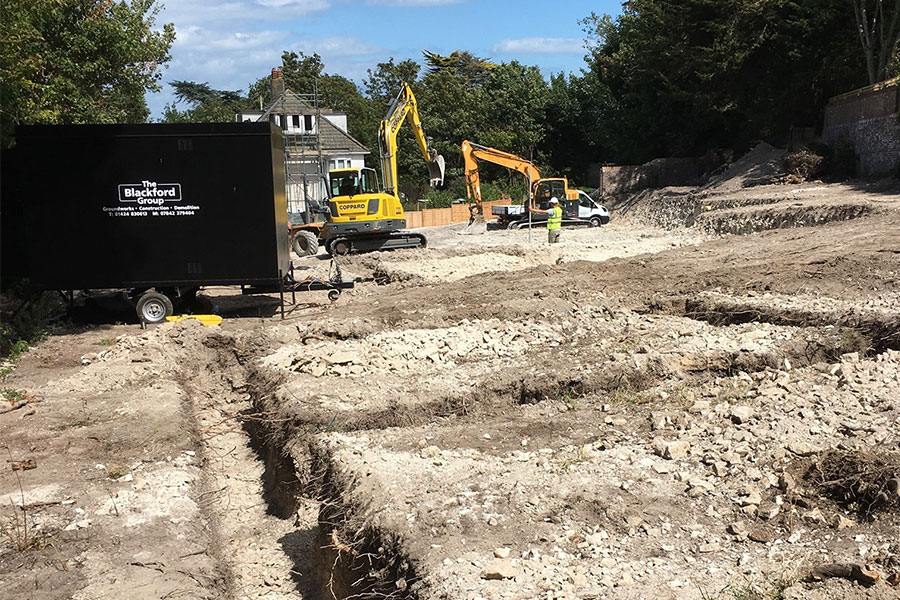
If you have a building to empty, send us the drawings, the asbestos survey and the dilapidations schedule or scope if you have them, and we will come and walk it with you. We would rather look above the ceiling and inside the risers than price off a plan, because that is where the cost usually hides. From our yard at Upper Wilting Farm, St Leonards-on-Sea, East Sussex TN38 8EG we take on strip out work across the country, and because the demolition, groundworks, haulage and muck away are ours as well, the phases after the strip are already covered by the same people. Call 01424 830613 and we will talk it through.
Need Strip Out?
Tell us what you need moving, clearing or building and we will come back with a straight answer and a fair price.